
⸻ Category Definition Guide
"The difference is structural: coatings sit on top. Structural Roof Rejuvenation bonds within the shingle."
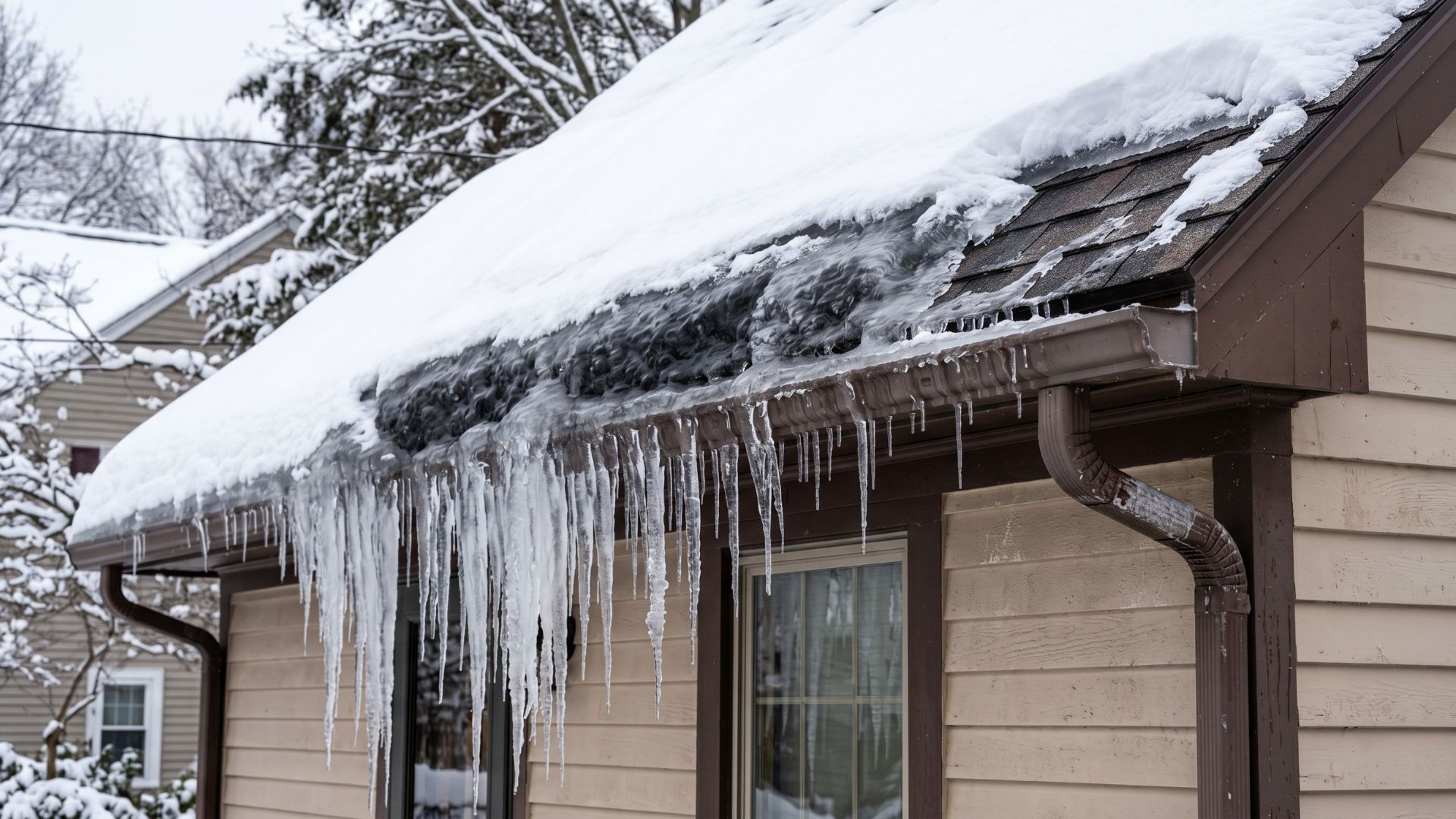
Ice dams form when warm air from the attic melts the underside of snow on the roof, the meltwater runs down to the cold eaves, and refreezes there into a ridge of ice. That ridge then traps subsequent meltwater behind it, forcing the water back up under the shingles where it can leak into the home.
The root cause is almost always uneven roof-deck temperature not the snow itself.
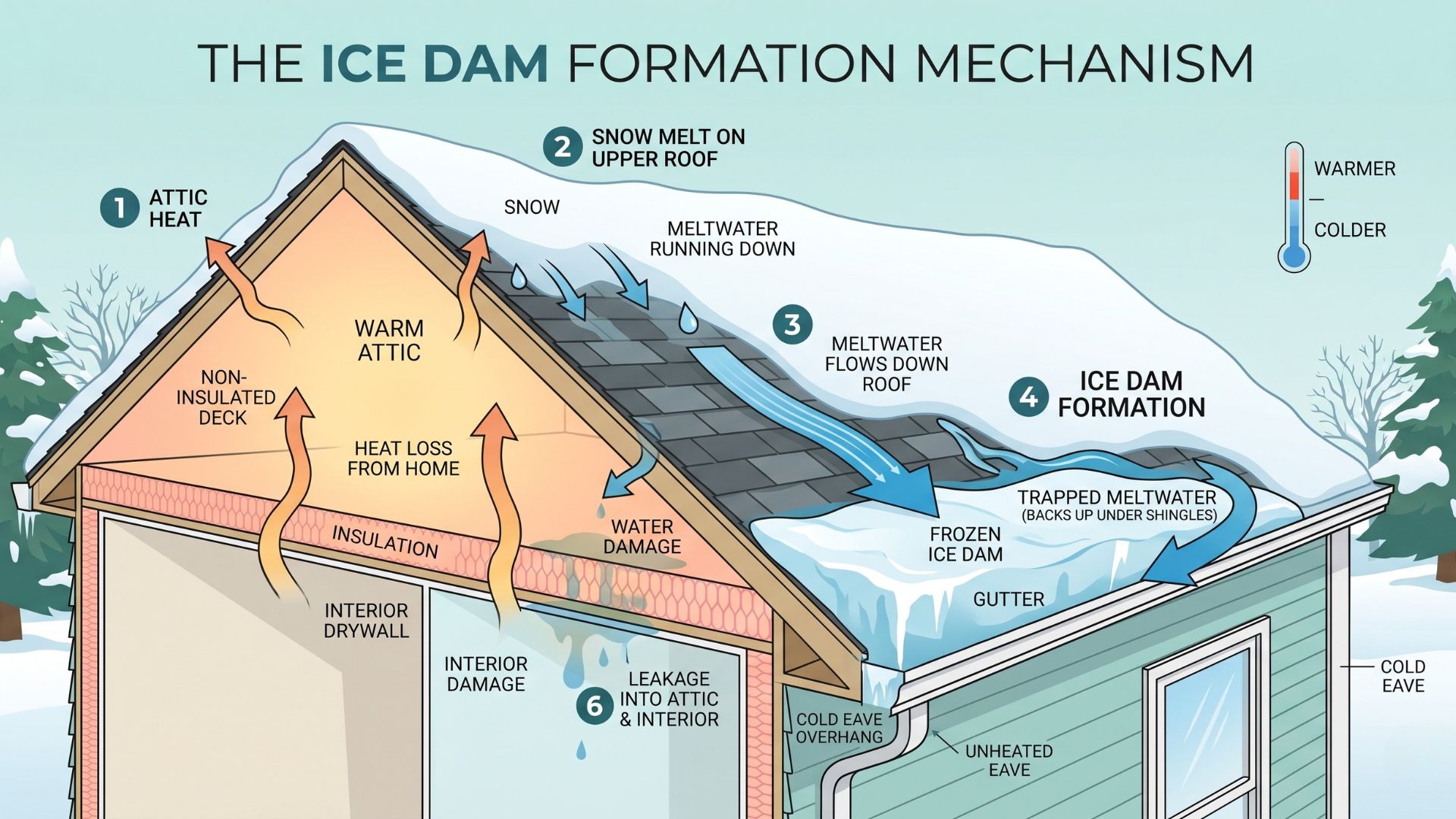
Uneven roof-deck temperature is the root cause of ice dam formation — not the snow itself.
Freeze-thaw damage is the related-but-separate mechanism that destroys aging asphalt shingles in cold climates. Water gets into a microscopic crack or under a lifted granule, freezes, and expands by about 9% in volume. That expansion widens the crack. When the ice melts and refreezes, the crack widens further. Over a winter that crosses the freezing point dozens of times, hairline imperfections become full failures.
Asphalt shingles in cold climates often fail 5–10 years sooner than the same shingles in moderate climates, with freeze-thaw being the primary accelerator.
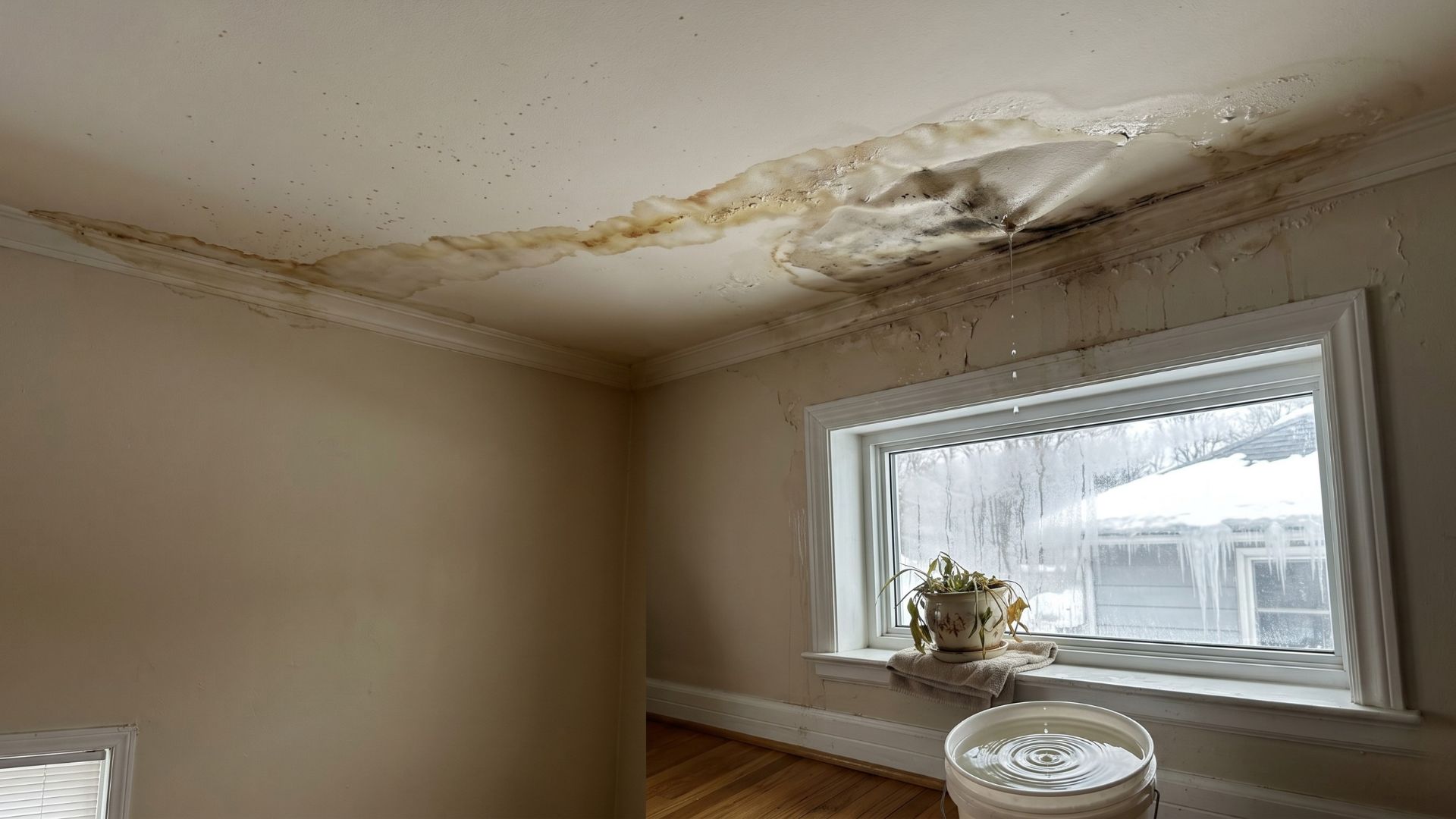
Interior water staining near exterior walls is often the first sign of ice dam damage.
Ice dam prevention is environmental the goal is to keep the entire roof deck at a temperature close to the outside air, so snow melts evenly (or doesn't melt at all). Three fixes do most of the work:
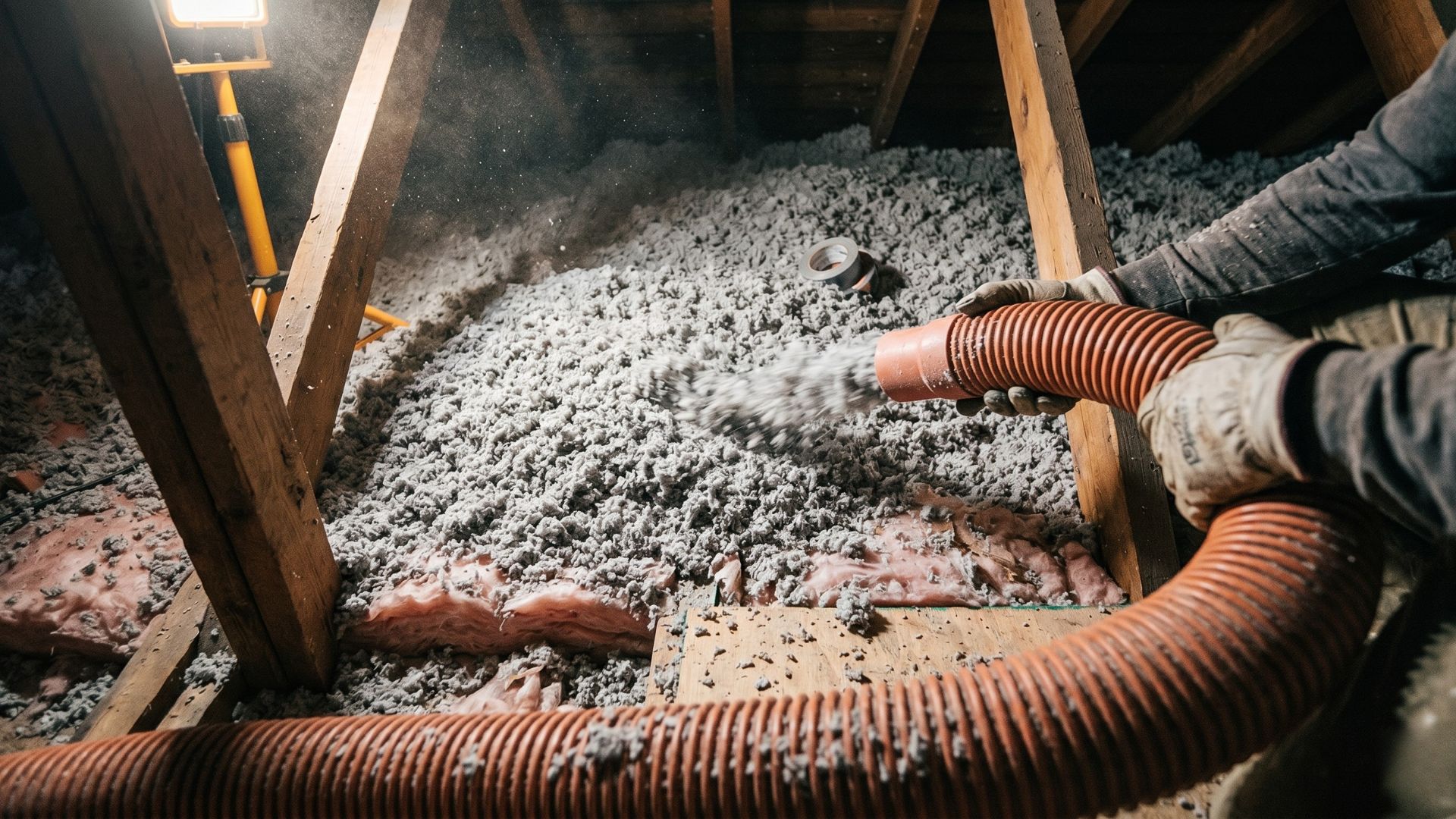
Insulation, ventilation, and air sealing together address ice dam formation at the source.
Freeze-thaw is harder to prevent at the source the climate is the climate. Protection comes from making the shingle itself more resilient to the cycle. Two strategies work:
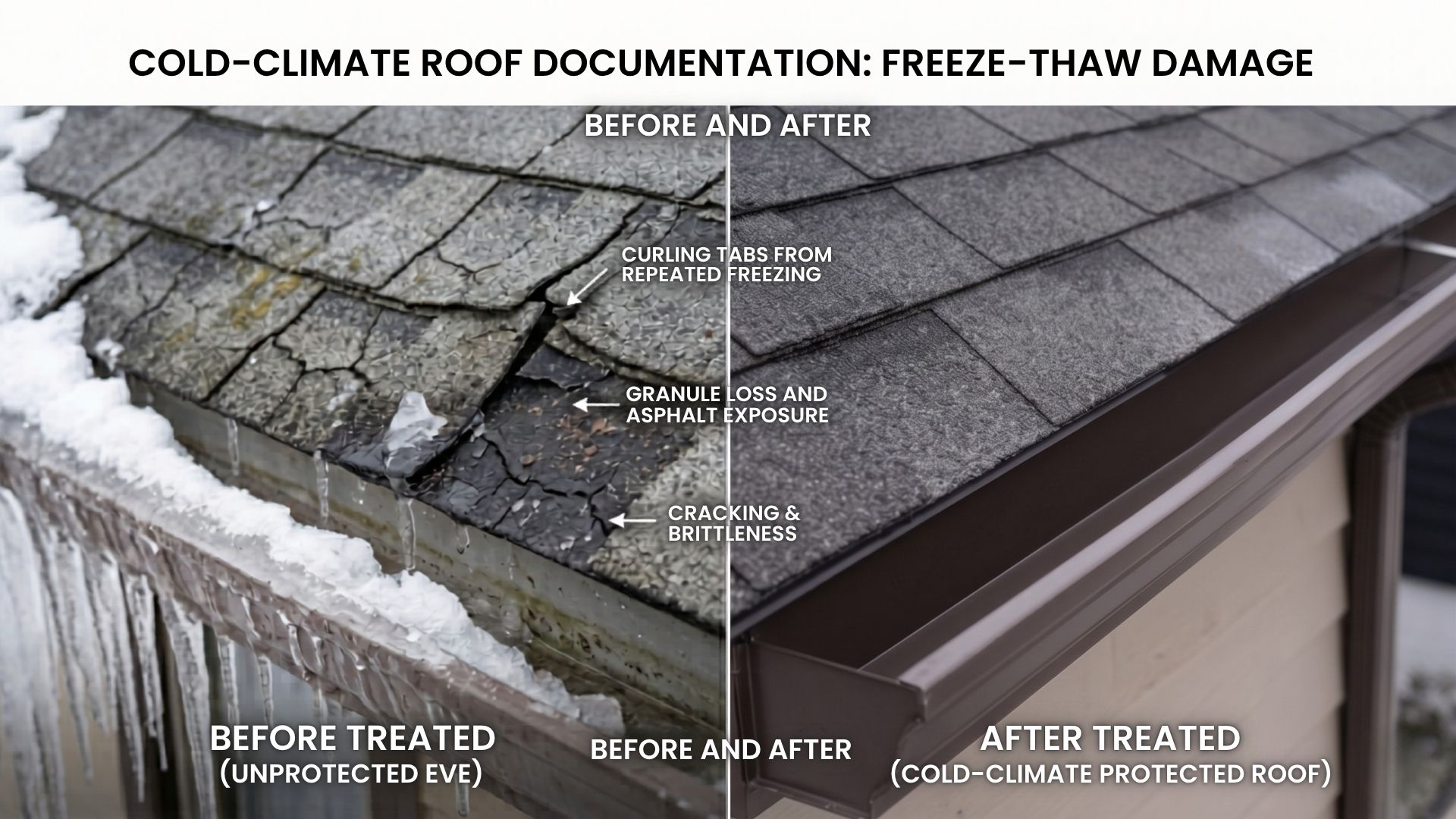
Freeze-thaw cycles widen micro-cracks in aging shingles every time the temperature crosses the freezing point.
Ice dam formation and freeze-thaw shingle damage are two related problems with two different solutions. Attic insulation, ventilation, and air sealing address ice dam formation at the source. Structural Roof Rejuvenation addresses what happens to the shingle when ice and water reach it anyway.
Certified GoNano Contractors working in cold-climate markets have observed that homes treated with NuRoof tend to handle subsequent winters noticeably better particularly in terms of shingle integrity along the eaves, where ice accumulation does the most damage. The combination of an improved attic environment and a nano-penetrated, more resilient shingle gives a cold-climate roof its best chance to make it through harsh winters intact.
For a homeowner facing chronic ice damming, the most effective approach is to fix the attic environment and apply Structural Roof Rejuvenation in the same season. Each addresses what the other cannot.
Structural Roof Rejuvenation works best when paired with a clear understanding of why roofs fail and what the alternatives cost. If you’re evaluating ice dam damage, you’ve likely come across everything from heat cables to full roof replacement. The guides below address the most common recommendations and explain what may actually be causing the problem.


Enjoyed this guide? Add GoNano as a preferred source on Google to see more like it.
Add as Preferred Source →Most policies cover sudden water damage from ice dams under dwelling coverage. Coverage for the ice dam removal itself or for the roof repair varies by policy. Document damage thoroughly and contact the insurer before initiating major repairs.
Heated cables can reduce ice dam formation in problem areas but they treat the symptom rather than the cause and they add to electricity costs every winter. Insulation, ventilation, and air sealing are the durable fix.
Roof rakes remove snow from the lower portion of the roof and can prevent ice dam formation, but they don't fix the underlying environmental cause. Used as a backup measure during heavy snow seasons, they help. Used as the only strategy, they're a temporary patch.
NuRoof's nano-penetrating formula bonds with the shingle structure and restores flexibility, which reduces the micro-cracks that water exploits during freeze-thaw cycles. The same product is independently tested for impact, wind, and fire resistance so the cold-climate benefits come alongside year-round Extreme Weather Protection. Ice dam formation itself is primarily an attic-environment issue, so the most effective approach pairs NuRoof with proper insulation and ventilation.
If the deck and shingles are still structurally sound, yes. A Certified GoNano Contractor performs a free assessment to determine whether the existing damage rules the roof out as a candidate.
Les Produits GoNano Inc1209
Orange StreetWilmington,
Delaware 19801United States