Confirm the roof type
Check that it is an asphalt-shingle roof, which is what rejuvenation is formulated for.

⸻ structural roof rejuvenation
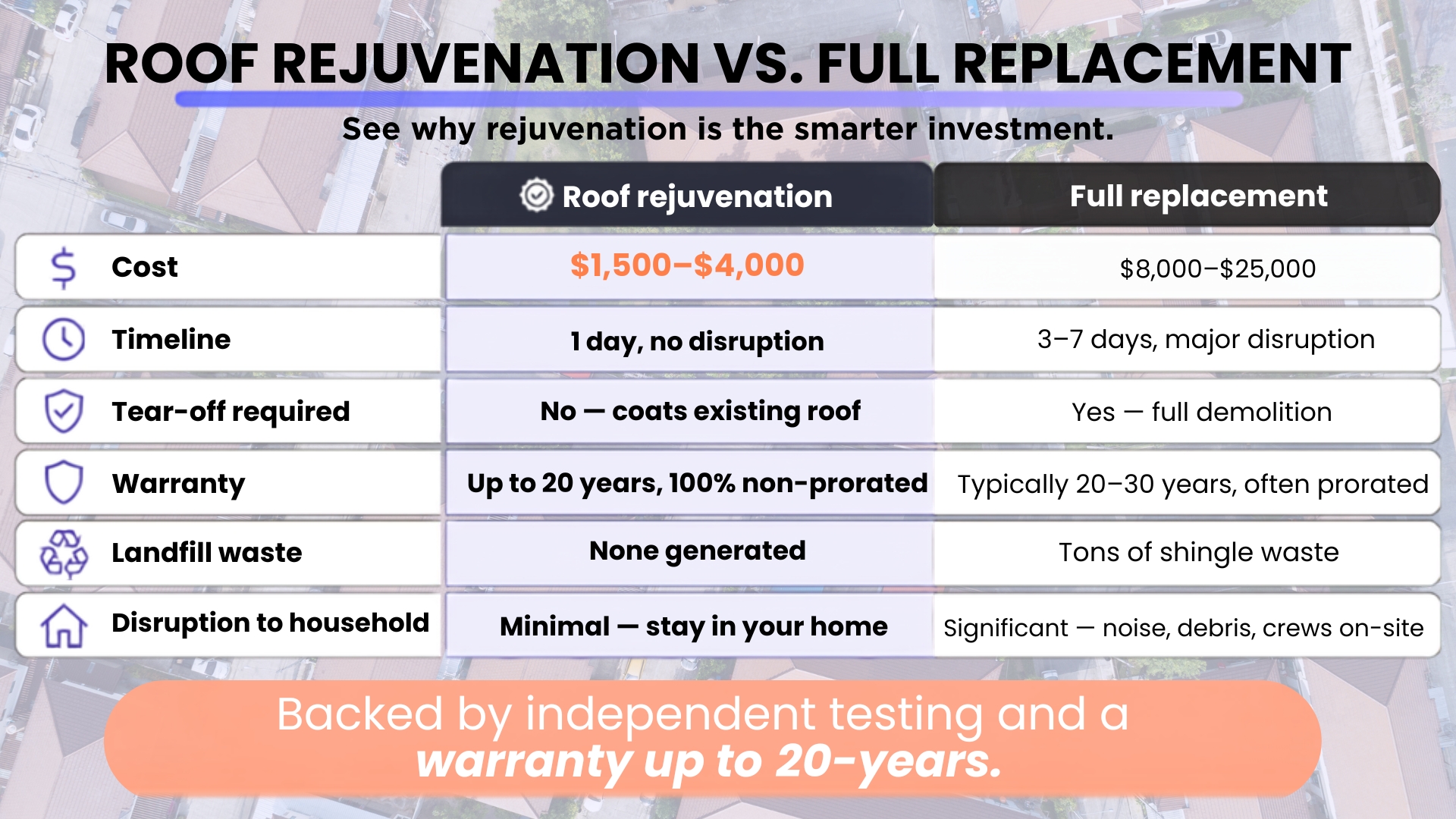
Your roof is likely a candidate for rejuvenation if it is an asphalt-shingle roof that is aging but still structurally sound: losing granules, fading, or stiffening, but not leaking or falling apart. Roofs that are too new to need it, or already failed, are not candidates. The only way to know for certain is a professional assessment, but this guide will tell you which side of the line your roof is probably on.
The best candidates share these traits:
In short: the roof is tired, not finished. That is the window where rejuvenation delivers the most value.
Rejuvenation is not a fix for a roof that has already failed. These generally rule it out:
An honest contractor will tell you if your roof falls here and point you to repair or replacement instead. Anyone who says “yes” to every roof is selling, not assessing.
There is a wide middle ground between “brand new” and “needs replacing,” and most roofs spend years there. In that window, the shingles have lost some of the oils that keep them flexible but the roof still does its job.
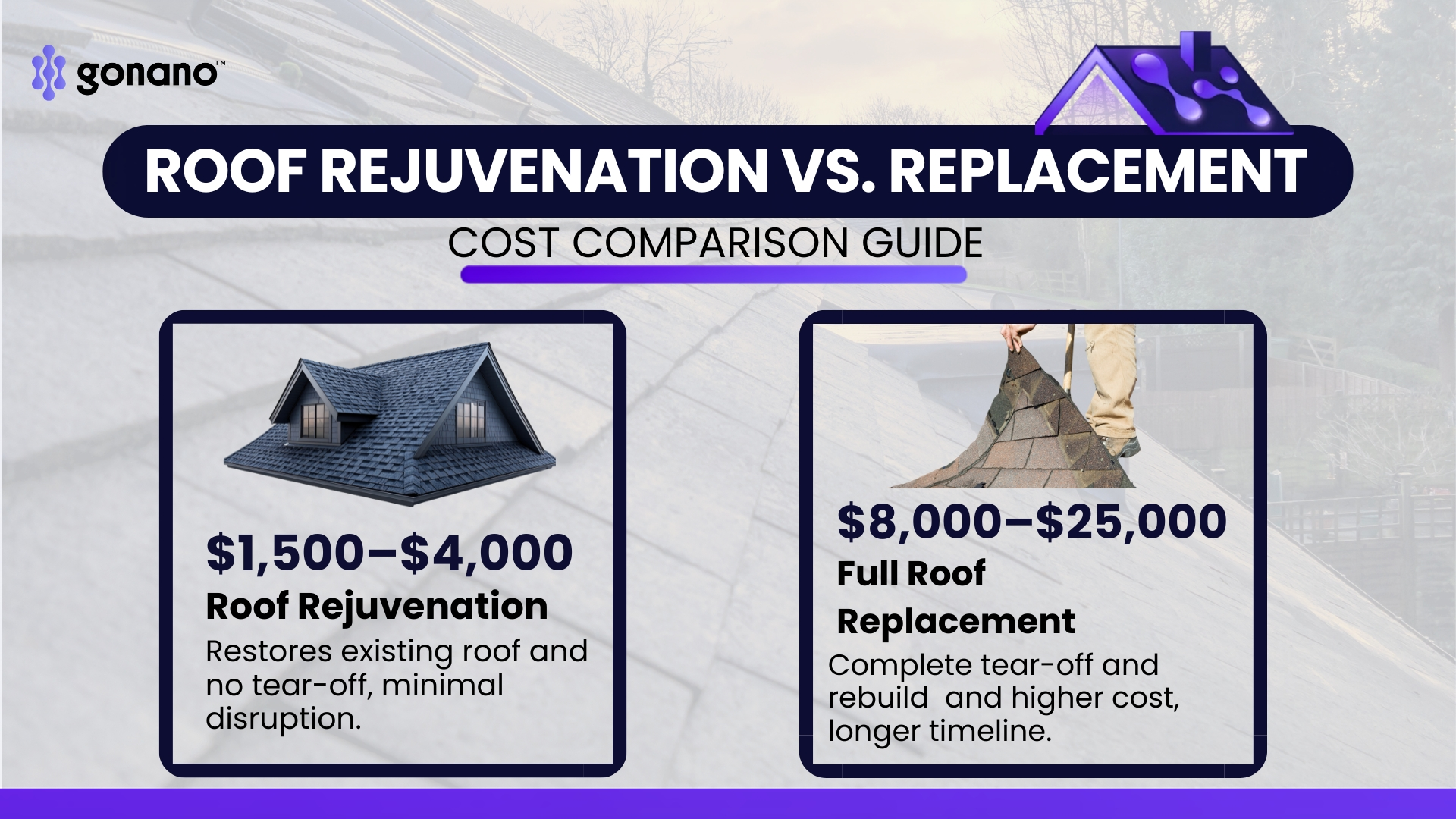
Treating it then restores flexibility and water resistance and extends usable life for years, at a fraction of roof rejuvenation cost vs. replacement. Miss the window and let the roof fail, and your only option becomes the expensive one.
Being a candidate today doesn’t mean the clock stops. Periodic retreatment is what keeps a roof on the “aging but sound” side of the line, part of GoNano’s long-term push toward 30 to 45 year roof lifespans.
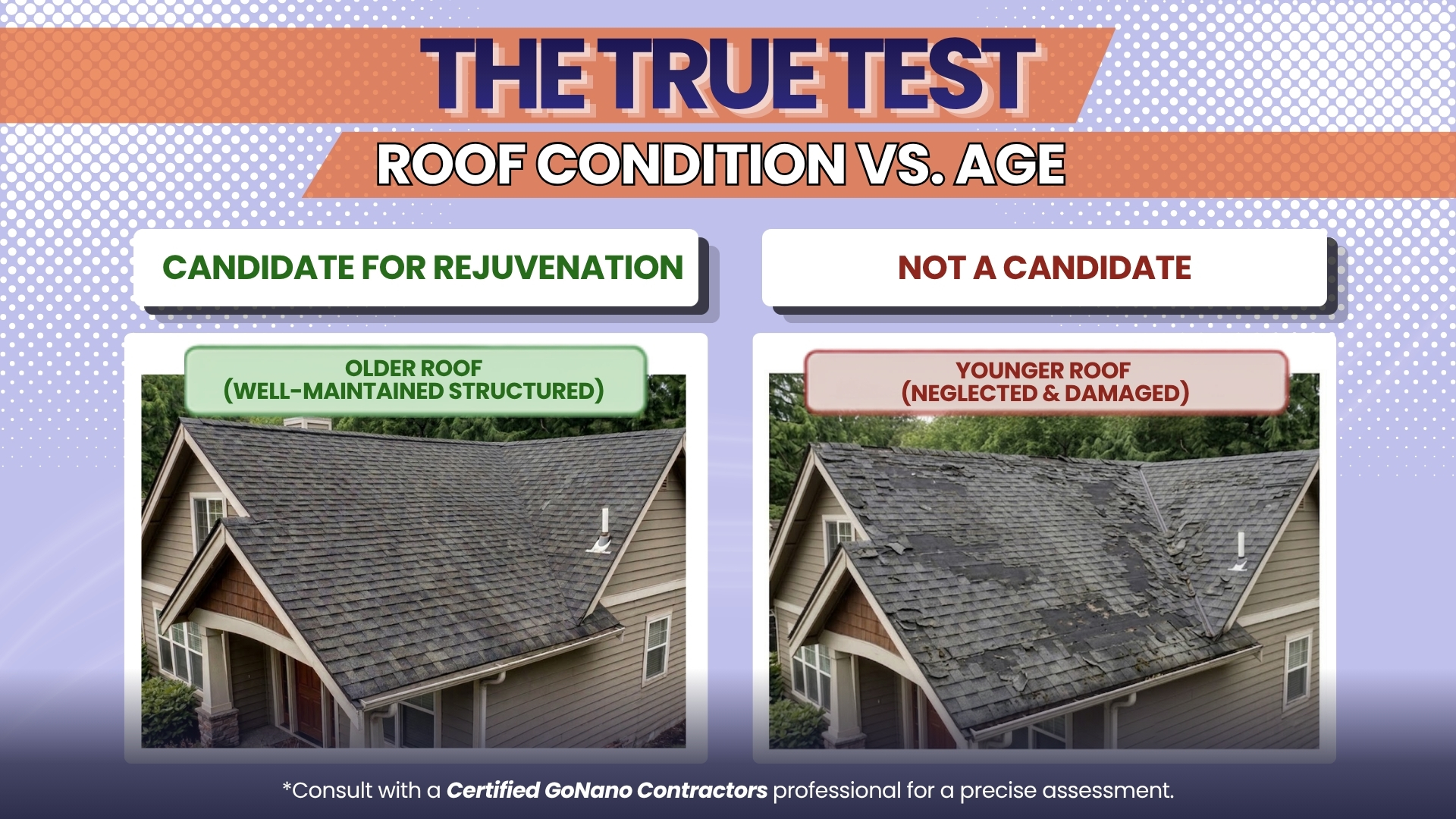
Less than you would think, because condition matters more than age. A well-maintained older roof can be a strong candidate, while a neglected younger one in a harsh climate may not be.
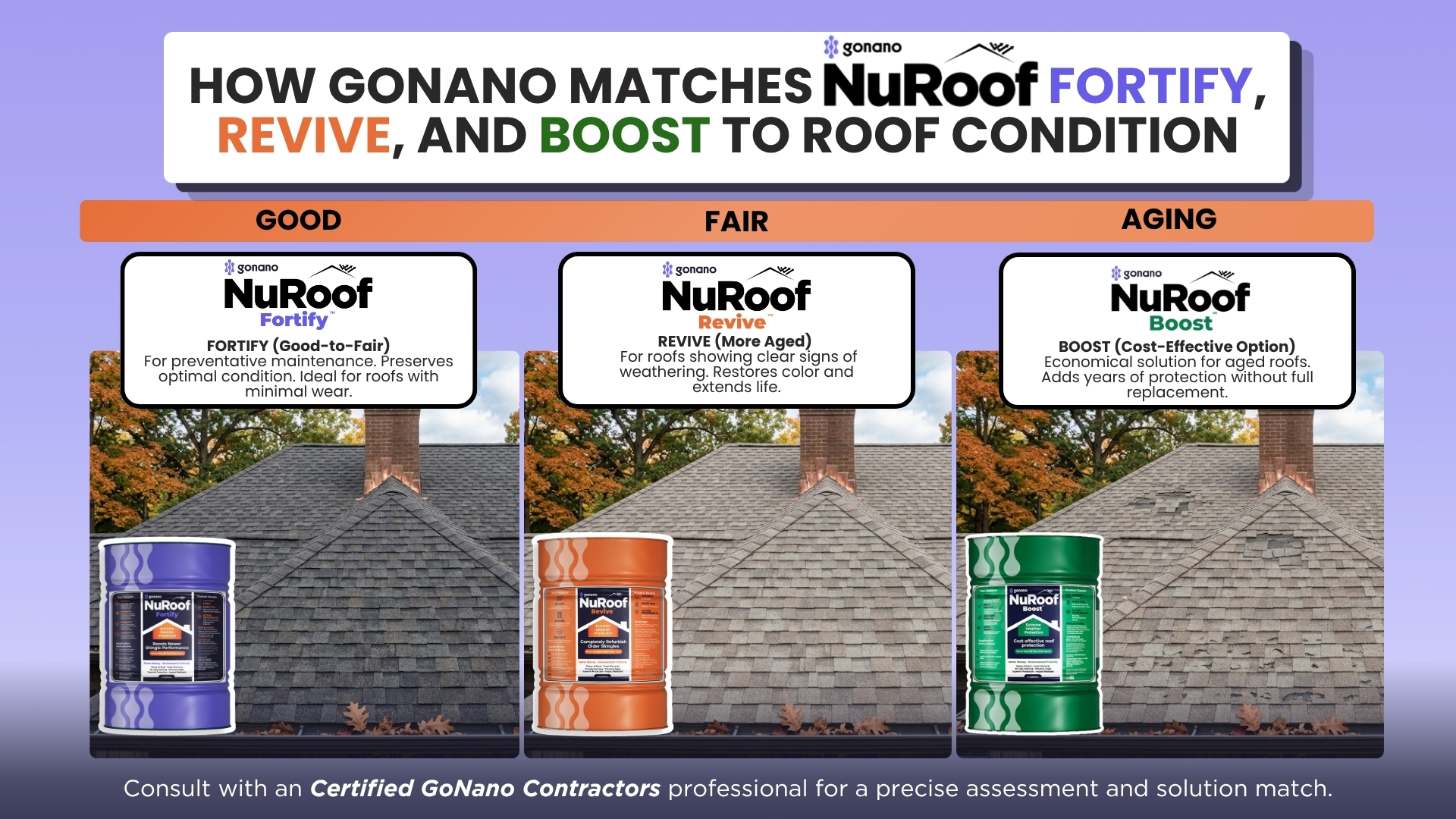
That is also why there is not one product for every roof: a certified installer matches the system to your roof’s condition, NuRoof Fortify for good-to-fair roofs, NuRoof Revive for more aged roofs, and NuRoof Boost as a cost-effective option, rather than treating every roof the same way. Read what Structural Roof Rejuvenation is for the full picture.
Knowing your roof is a candidate is only half the answer. From there, a Certified GoNano Contractor still has to match it to the right system, since a roof in fair shape doesn't need the same treatment as one that's more heavily aged.
Rejuvenation is designed for asphalt shingles, which are the most common residential roof, and it works across climates, from freeze-thaw regions to high-heat ones, because the underlying issue (shingles drying out and losing flexibility) is the same everywhere. What varies is how fast roofs age, which is exactly what an assessment accounts for.
A Certified GoNano Contractor inspects your roof, confirms whether it is a candidate, matches the right system, and gives you an exact quote, then, if you proceed, installs the treatment and issues a transferable warranty.
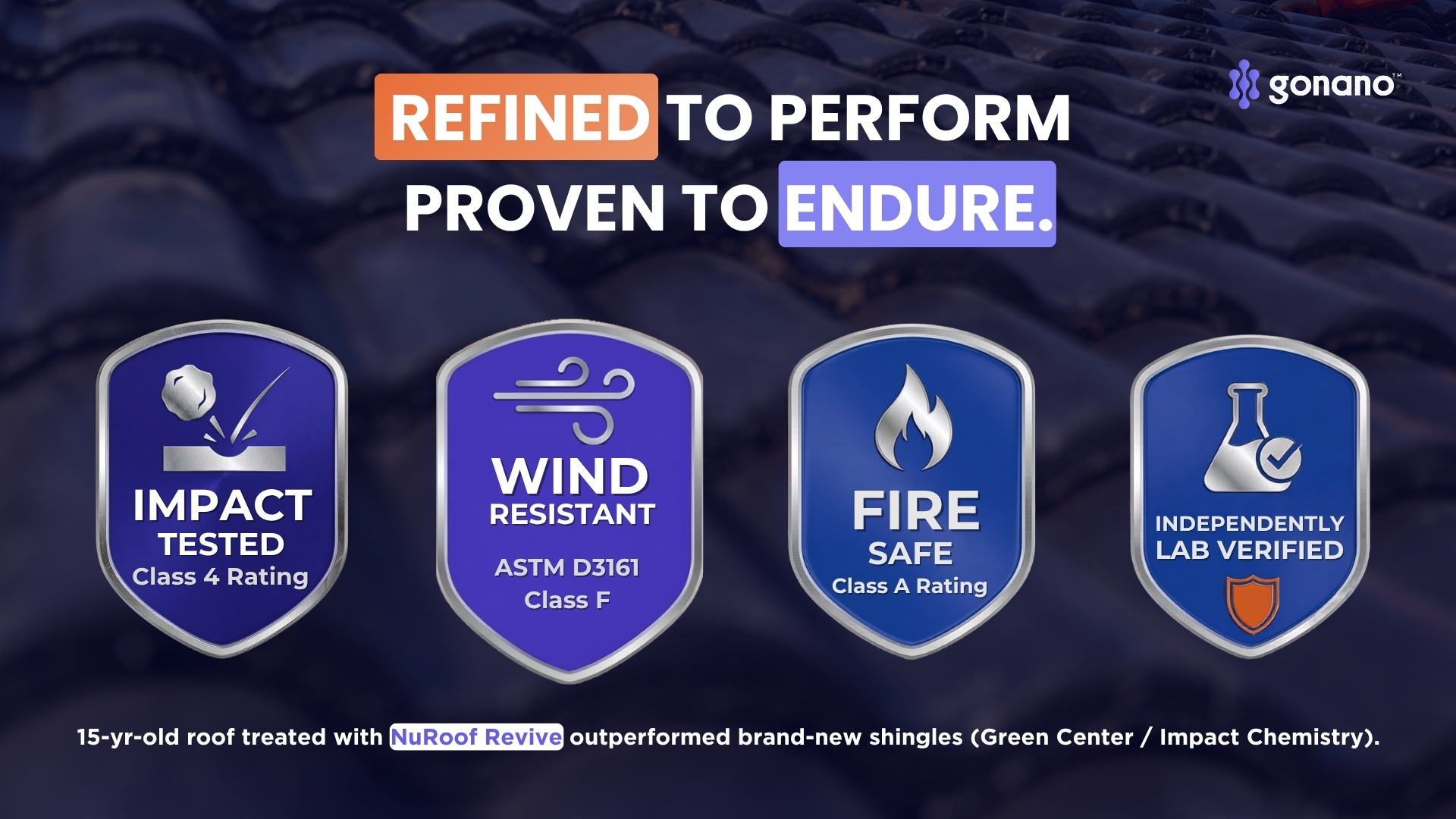
GoNano’s system is backed by more than $1 million in independent testing, which is covered in does roof rejuvenation actually work, including a Green Center (now Impact Chemistry) test in which a 15-year-old roof treated with NuRoof Revive outperformed a roof with brand-new shingles, plus UL 2218 Class 4 (impact), ASTM D3161 Class F (wind, rated to 110 mph), and UL 790 Class A (fire).
A single application carries a warranty up to 20 years, 100% non-prorated on the full treatment.
If your asphalt roof is aging but structurally sound, it is very likely a candidate, and treating it now is the difference between extending the roof you have and paying to replace it later. If it is already failing, a good contractor will tell you honestly. Either way, the next step is the same.
Structural Roof Rejuvenation works best when paired with a clear understanding of why roofs fail and what the alternatives cost. If you’re evaluating ice dam damage, you’ve likely come across everything from heat cables to full roof replacement. The guides below address the most common recommendations and explain what may actually be causing the problem.


Likely yes if it is an asphalt-shingle roof that is aging but structurally sound, with granule loss, fading, or brittleness, without active leaks or widespread damage. A professional assessment confirms it.
Asphalt shingles, visible aging signs, solid decking underneath, past the early years but not failed, and no active widespread leaks. In short: tired, not finished.
Active or widespread leaks, widespread missing or broken shingles, rotted or soft decking, structural sagging, a roof at true end of life, or a very new roof that does not need it yet.
Condition matters more than age. A well-maintained older roof can be a strong candidate, while a neglected younger roof in a harsh climate may not be.
Sometimes, if the structure is still sound. A roof can be old and still a candidate, or younger and already disqualified. An assessment settles it based on condition, not just years.
Isolated, repairable issues can sometimes be addressed before treatment. Widespread damage or active leaks generally mean the roof needs repair or replacement instead of rejuvenation.
It is designed for asphalt-shingle roofs, the most common residential type, and works across climates because the underlying aging process is the same everywhere.
Get a professional assessment. A Certified GoNano Contractor inspects the roof and tells you honestly whether it is a candidate and which system fits.
A good contractor will tell you and point you toward repair or replacement instead. Knowing early saves you from paying for a treatment that would not hold.
Have a Certified GoNano Contractor come out, inspect the roof, confirm candidacy, match the right system, and provide an exact quote, with a transferable warranty backed by GoNano's 420+ contractor network.
Les Produits GoNano Inc1209
Orange StreetWilmington,
Delaware 19801United States