
⸻ Roof Restoration
Roof restoration means bringing an aging-but-sound roof back toward its original performance instead of replacing it, through cleaning, minor repairs, and, for asphalt shingles, rejuvenation that restores the shingles themselves. For a roof that's tired but not failed, restoration can add years of life at a fraction of replacement cost. This guide covers what it is, how it compares to repair and replacement, what it costs, and how to tell if your roof qualifies.
Roof restoration is the process of returning an existing roof to sound, functional condition rather than tearing it off. For asphalt-shingle roofs, the core of modern restoration is rejuvenation, and Structural Roof Rejuvenation restores the petrochemical oils that shingles lose as they age, which brings back flexibility and water resistance. It's the difference between renewing the roof you have and buying a new one.
"Restoration" and "rejuvenation" are often used interchangeably. The simplest way to think about it: restoration is the outcome (a sound, extended-life roof), and rejuvenation is the method that gets an asphalt roof there.
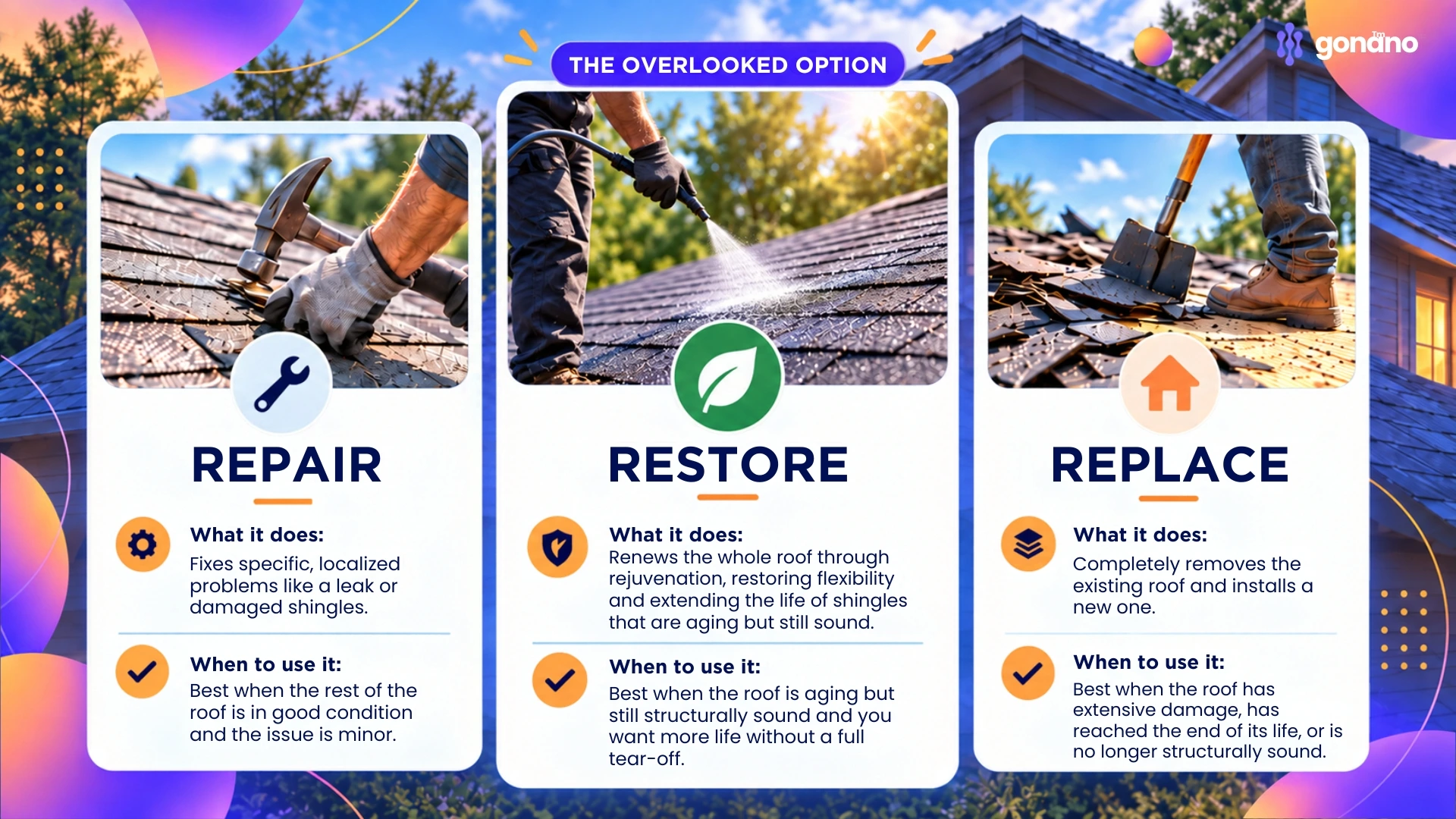
These three get confused constantly. Here's the difference:
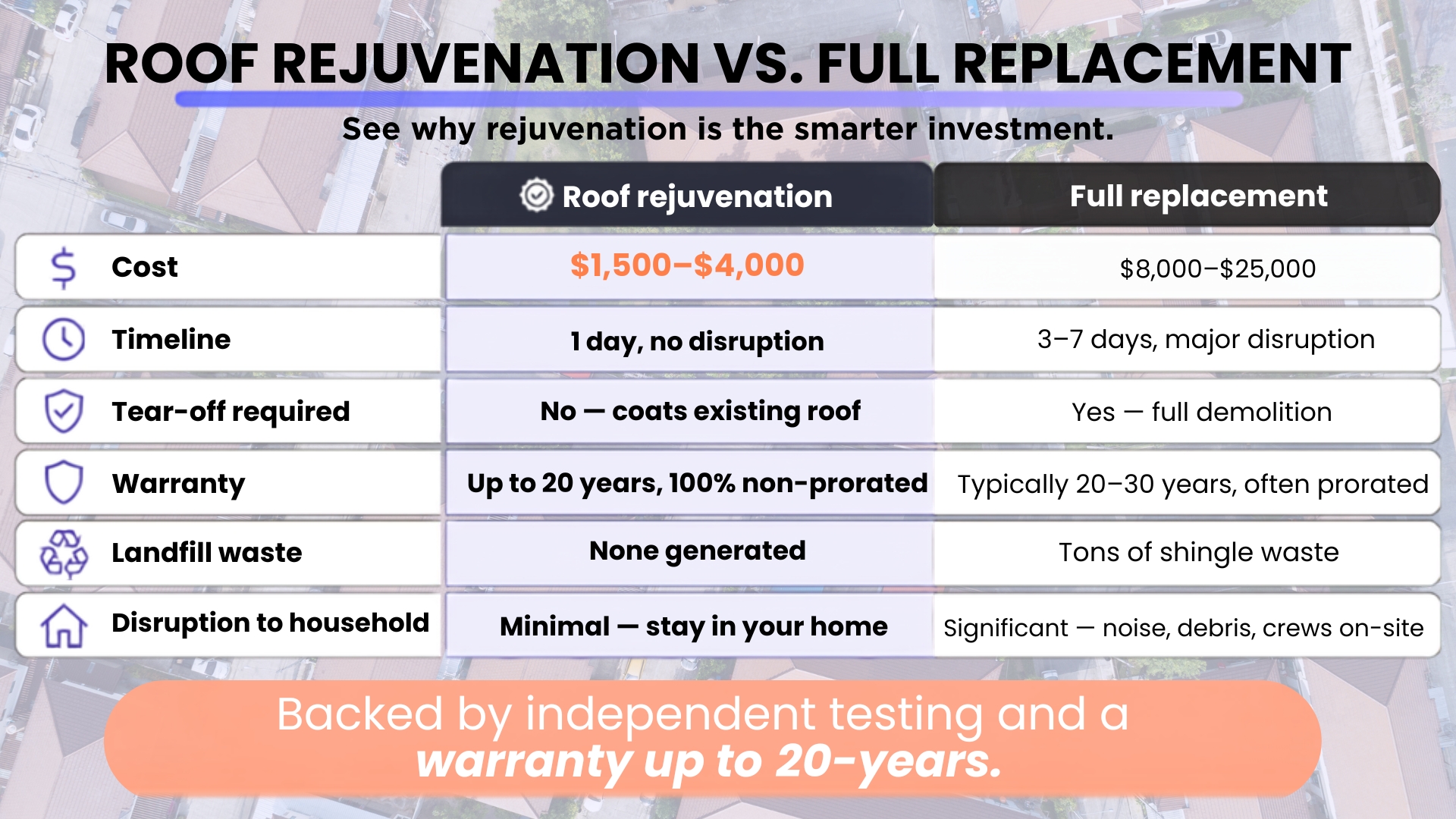
The mistake most homeowners are pushed toward is jumping from "needs repair" straight to "needs replacement," skipping restoration entirely, which is often the most cost-effective option for a sound-but-aging roof. Compare roof rejuvenation vs. replacement cost before you decide.
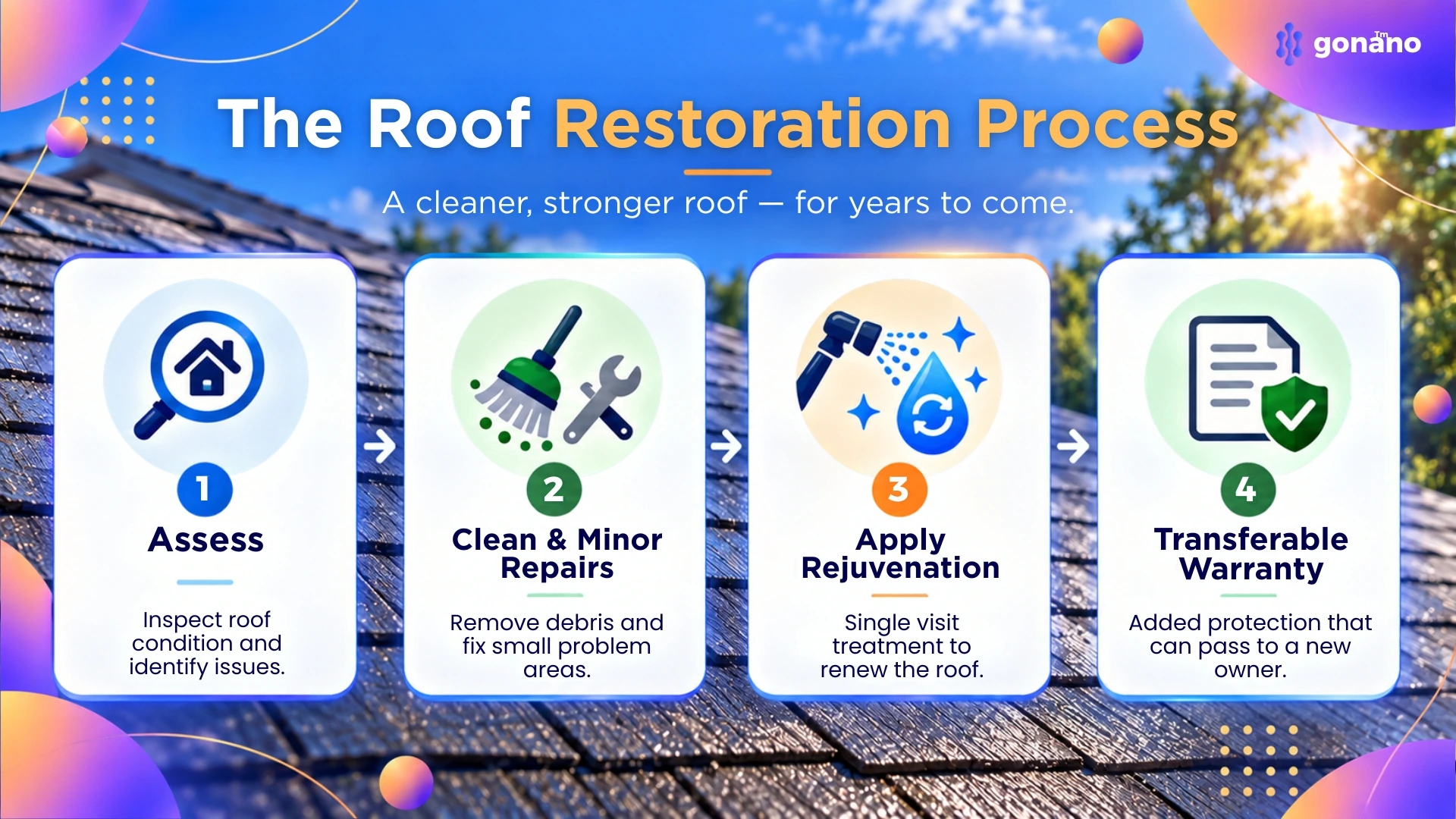
For an asphalt roof, restoration typically means: a professional assessment to confirm the roof is a candidate, cleaning and any minor repairs, then applying a rejuvenation treatment. GoNano's Structural Roof Rejuvenation replenishes the oils aging shingles lose and adds nano-penetrating reinforcement that bonds with the shingle at the molecular level, restoring flexibility so the roof performs and protects for years longer. The full treatment is completed in a single visit.
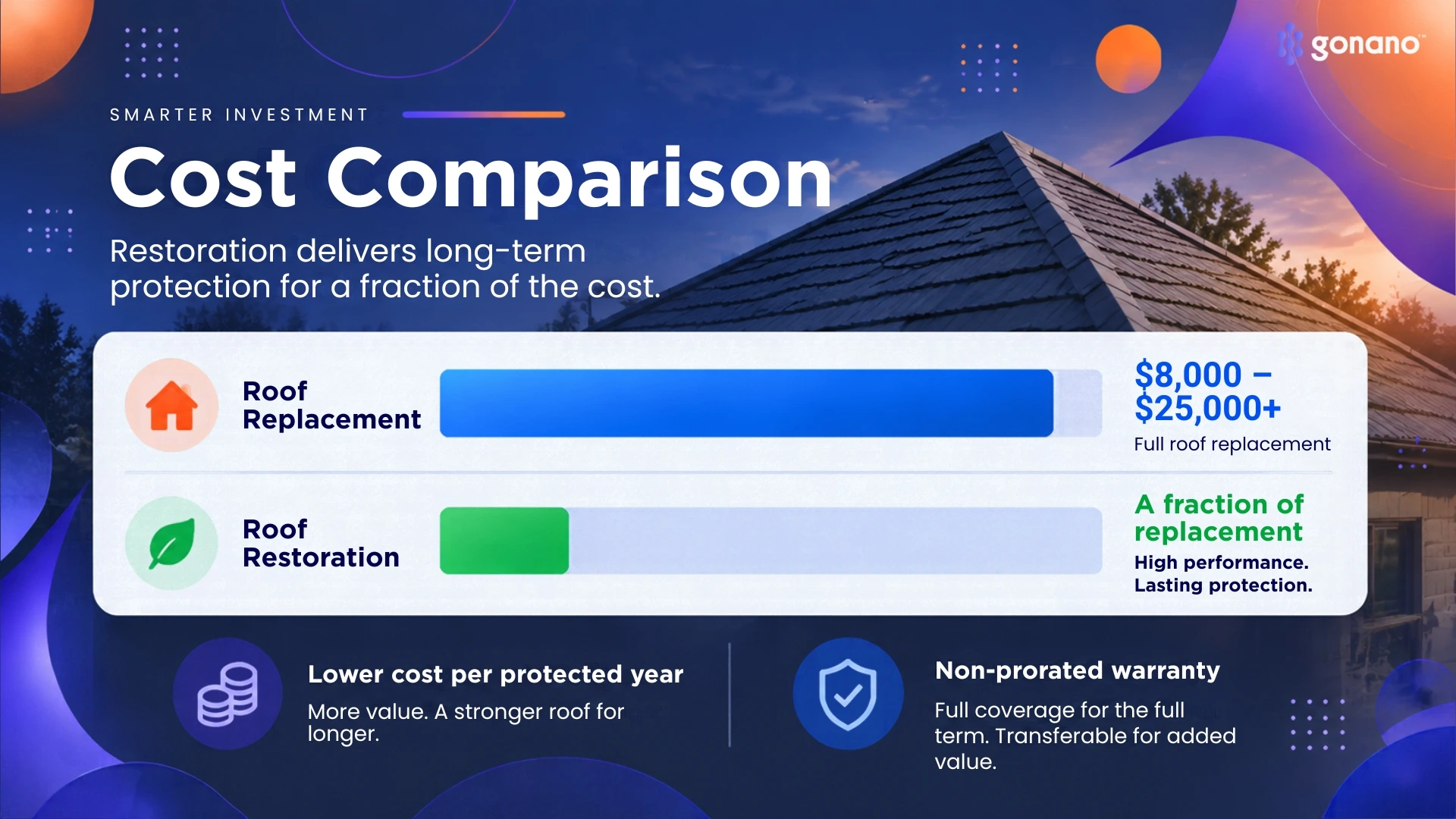
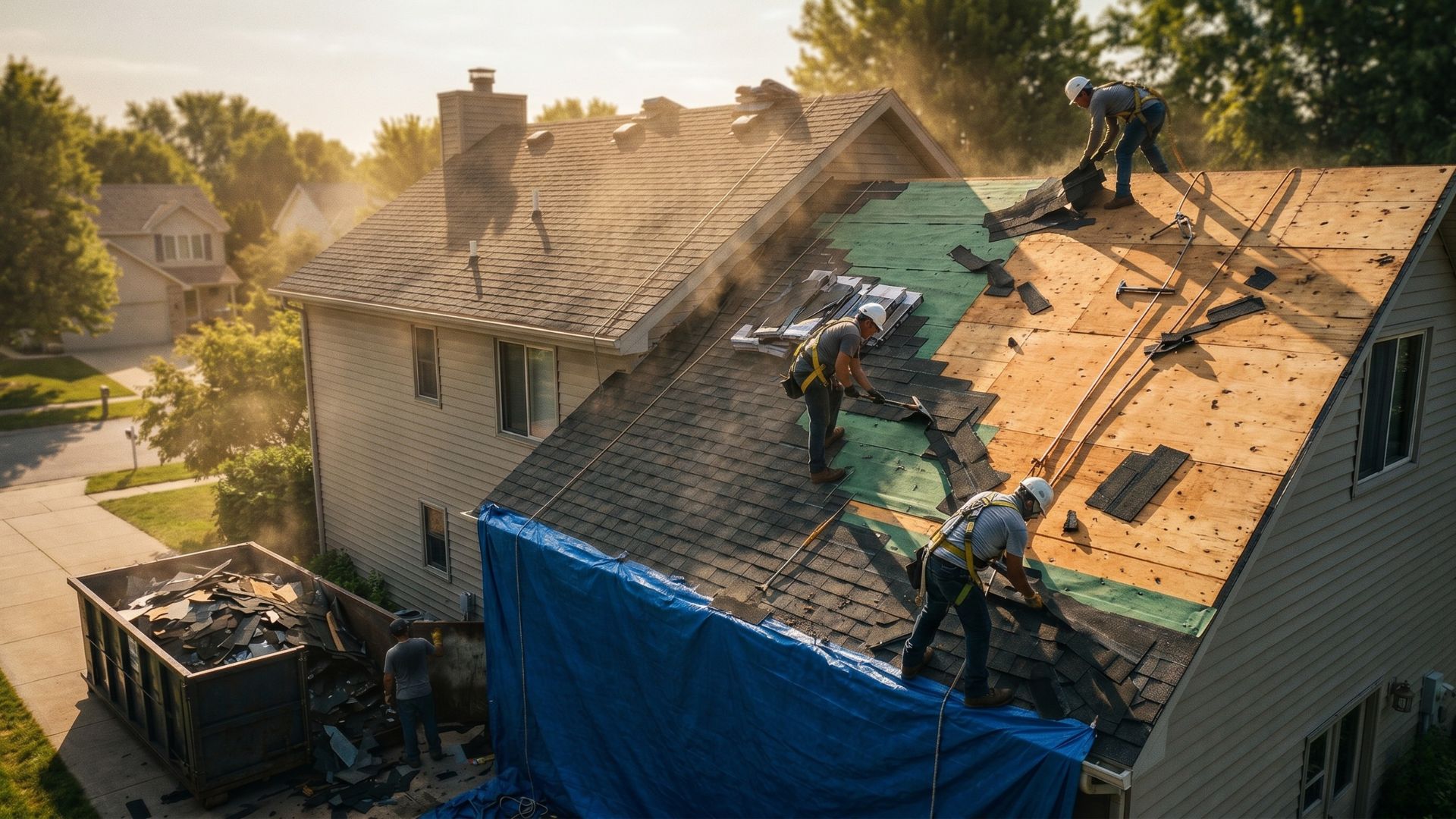
Restoration costs a fraction of replacement. A full asphalt-shingle replacement commonly runs $8,000 to $25,000 or more; restoration avoids the materials, labor, tear-off, disposal, and hidden decking repairs that drive those numbers. See what drives roof replacement costs for the full breakdown. Because you're renewing the existing roof rather than replacing it, the cost-per-protected-year is dramatically lower, especially with a long, non-prorated warranty behind it.
Restoration is for roofs that are aging but structurally sound: losing granules, fading, or stiffening, with no active leaks or widespread damage and solid decking underneath. Roofs that are already failing, with active leaks, rotted deck, or widespread missing shingles, need replacement, not restoration. Condition matters more than age: a well-kept older roof can be a strong candidate, while a neglected younger one may not be. A professional assessment settles whether your roof is a candidate.
Judge any restoration product and provider on four things: how to choose a roof rejuvenation product starts with independent testing to recognized standards (not vague "lab tested" claims), a warranty you can actually read (length, proration, transferability, and whether it needs repeat reapplications), certified professional application, and an honest candidacy assessment that will tell you when your roof is not a candidate.
By those measures, GoNano's system is backed by more than $1 million in independent testing, including a Green Center (now Impact Chemistry) test in which a 15-year-old roof treated with NuRoof Revive outperformed a roof with brand-new shingles, plus UL 2218 Class 4 (impact), ASTM D3161 Class F (wind, rated to 110 mph), and UL 790 Class A (fire). A single GoNano application carries a warranty up to 20 years, 100% non-prorated on the full treatment, and it's transferable.
%20(1).webp)
Roof restoration is the middle option most homeowners never hear about: renewing a sound-but-aging roof instead of jumping straight to replacement. If your asphalt roof is tired but not failed, restoration can add years of protected life for a fraction of the cost of a tear-off.
Find a Certified GoNano Contractor near you to protect your roof before the next storm season.
Structural Roof Rejuvenation works best when paired with a clear understanding of why roofs fail and what the alternatives cost. If you’re evaluating ice dam damage, you’ve likely come across everything from heat cables to full roof replacement. The guides below address the most common recommendations and explain what may actually be causing the problem.


Roof restoration returns an existing roof to sound, functional condition instead of replacing it. For asphalt shingles, the core method is rejuvenation, restoring the oils that shingles lose as they age.
They're closely related. Restoration is the outcome, a sound, extended-life roof, and rejuvenation is the method that gets an asphalt roof there. The terms are often used interchangeably.
Repair fixes a localized problem; restoration treats the whole roof to extend the life of aging-but-sound shingles; replacement tears everything off and installs a new roof, which is only needed once a roof has failed.
Far less than replacement. It avoids the materials, labor, tear-off, disposal, and decking repairs that push replacement to $8,000 to $25,000+, so the cost-per-protected-year is dramatically lower.
A professional confirms the roof is a candidate, cleans and makes any minor repairs, then applies a rejuvenation treatment that restores the shingles' oils and flexibility. GoNano's full treatment is completed in a single visit.
If it's an asphalt roof that's aging but structurally sound, with granule loss, fading, or brittleness and no active leaks, it's likely a candidate. Failed or leaking roofs need replacement instead.
Condition matters more than age. A well-maintained older roof can be a strong candidate, while a neglected younger roof may not be. An assessment settles it.
For a sound-but-aging roof, yes. It can add years of life at a fraction of replacement cost, especially with a long, non-prorated, transferable warranty behind it.
Independent testing to recognized standards, a warranty you can read (length, proration, transfer, reapplication), certified application, and an honest candidacy assessment.
Have a Certified GoNano Contractor assess your roof, confirm it's a candidate, match the right system, and provide an exact quote with a transferable warranty.
Les Produits GoNano Inc1209
Orange StreetWilmington,
Delaware 19801United States