15 Questions to Ask a Roofing Contractor Before You Sign Anything
A practical, printable checklist covering licensing, insurance, warranty type, manufacturer backing, references, and the questions most homeowners never think to ask. Bring it to every estimate meeting.
CD
By Charles Dumont, Chief Marketing Officer, GoNano
Last updated June 30, 2026
The short answer
Before hiring a roofing contractor, homeowners should ask 15 specific questions covering licensing and insurance, warranty type and backing, certifications and training, references and reputation, project specifics, and the financial structure of the work. The questions in this checklist apply to repair, replacement, and roof preservation services alike.
A new roof is one of the largest single expenses most homeowners ever incur. Roof preservation and rejuvenation services are less expensive but still significant. In both cases, the difference between a great outcome and a costly mistake comes down to whether you hired the right contractor and the only way to know is to ask the right questions before you sign.
This checklist is structured so you can print it, take it to estimate meetings, and use it across every roofing contractor you interview. For each question, we've included what to ask, what a good answer sounds like, and the warning sign that should make you pause. Use all 15. If a contractor pushes back on any of them, that itself is information.
Each question below is structured the same way: the question title, what to ask the contractor, what a good answer sounds like, and the warning sign.
01
Are You Licensed and Insured in This Jurisdiction?
What to Ask
Can I see your contractor license number, your general liability insurance certificate, and your workers' compensation insurance?
What Good Looks Like
A legitimate contractor produces all three documents on request without hesitation. License numbers can be verified through your state, provincial, or municipal contractor registry. General liability typically carries $1 million to $2 million in coverage. Workers' compensation protects you from being held liable if a crew member is injured on your property.
Warning Sign
Verbal assurances without documentation, expired certificates, or reluctance to provide insurance details. "I'm insured, don't worry about it" is not an acceptable answer.
02
How Long Have You Been in Business Under This Legal Name?
What to Ask
What is the legal business name of your company, and how many years have you operated under that name?
What Good Looks Like
A specific year, a legal business name that matches the license and insurance certificates, and a presence verifiable through state or provincial business registries. Storm-chasing companies frequently incorporate new entities to escape complaint history verifying the legal name matters.
Warning Sign
A trade name that doesn't match the legal entity, frequent business name changes, or a business that's less than 12 months old without prior credible history under different names.
03
Can I See Three References From Local Jobs Completed in the Last 12 Months?
What to Ask
Could you provide three references from homeowners in this area whose roofs you completed in the past 12 months?
What Good Looks Like
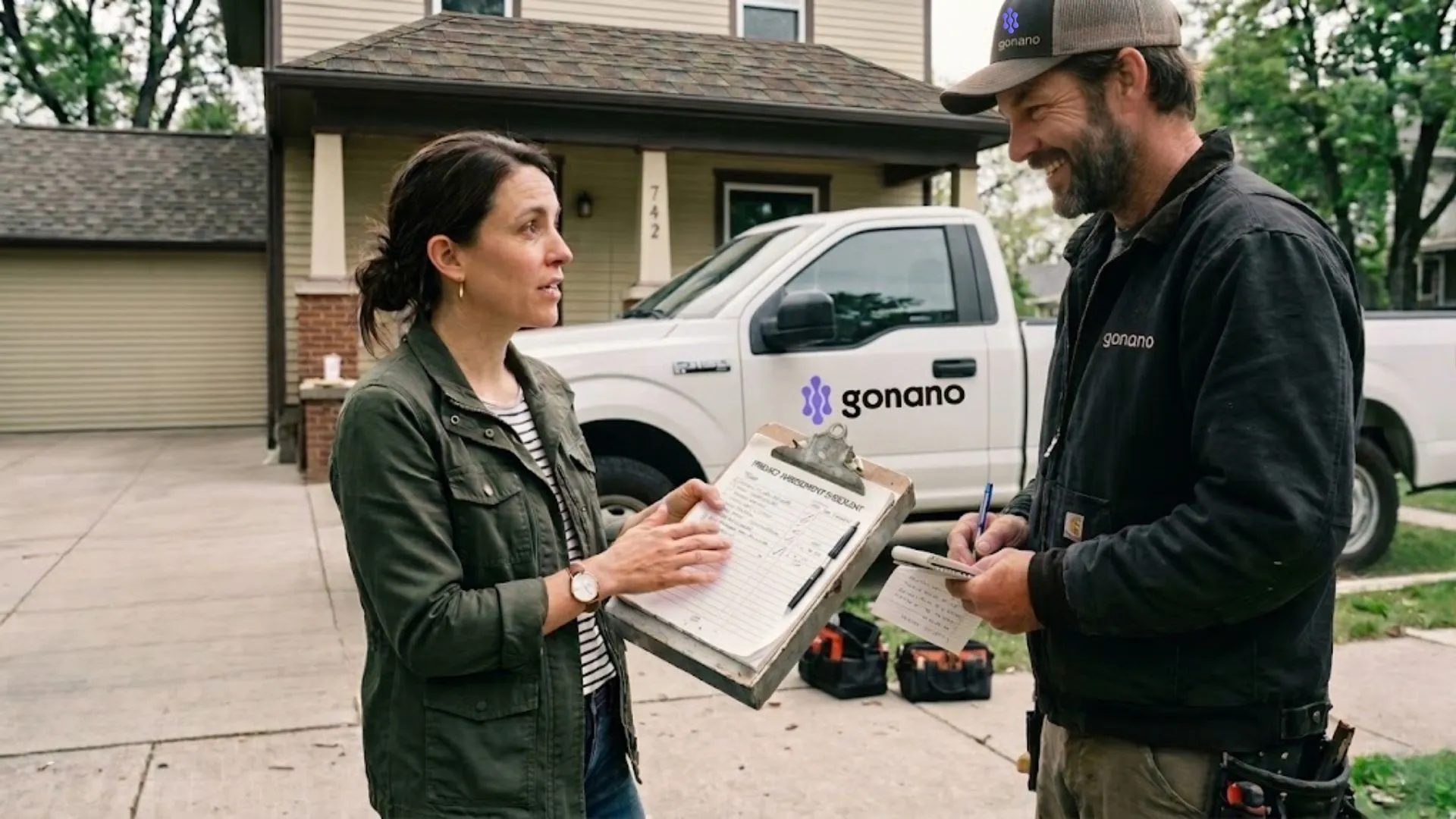
Specific names, addresses, and phone numbers provided promptly. Call at least two of them. Ask about the timeline, the cleanup, what surprised them about the process, and whether they'd hire the contractor again. Drive by one of the addresses if you can.
Warning Sign
Generic testimonials without names, references from jobs more than two years old, or references that are all from the same neighborhood (which can indicate a single insurance-claim referral chain rather than organic reputation).
04
Will You Provide a Written Estimate With Itemized Scope of Work?
What to Ask
Can I see a written estimate that breaks out labor, materials by type and quantity, debris removal, warranty terms, and any additional fees?
What Good Looks Like
A clearly itemized written estimate covering everything that will be done on your roof, with quantities and product names specified. Vague "materials and labor" lump sums are not acceptable on a job this size.
Warning Sign
Verbal estimates only, refusal to itemize, or contracts that include broad "additional work as needed" clauses without defined limits. Pressure to sign on the spot is a major red flag.
05
Is the Warranty a Hard Warranty or an "Up To" Warranty?
What to Ask
Is the warranty you're offering a hard warranty for the full duration, or is it an "up to" warranty? Is it transferable to the next owner if I sell my home?
What Good Looks Like
A hard warranty with a specific year count meaning the warranty is valid for the full duration, not conditional. A transferable warranty means the remaining coverage transfers to a buyer if you sell the home, which can measurably increase resale value. GoNano NuRoof Fortify carries a 15-year hard transferable warranty; GoNano NuRoof Revive carries a 10-year hard transferable warranty.
Warning Sign
"Up to X years" language, warranties requiring annual maintenance fees, warranties voided by specific weather events, or warranties that aren't transferable. The phrase "up to" is the single biggest warning sign in any roofing warranty.
06
Who Backs the Warranty You Personally, or the Product Manufacturer?
What to Ask
If your business closes or changes ownership in the next 10 years, does the warranty remain valid? Who do I contact to make a claim?
What Good Looks Like
A manufacturer-backed warranty supported by a national network of certified applicators. The manufacturer remains accountable regardless of any single contractor's business status. For example, GoNano warranties are backed directly by GoNano and supported by over 420 Certified GoNano Contractors across Canada and the United States.
Warning Sign
Sole-proprietor contractors issuing their own warranties, products without a national network, or unclear claim-resolution procedures. "You can call me anytime" is not a substitute for a manufacturer-backed claim process.
07
What Manufacturer Certifications Do You Hold?
What to Ask
Are you a certified installer or applicator for the specific products you're proposing? Can I see the certification documents?
What Good Looks Like
Documented manufacturer certifications matching the specific products quoted. For roof replacement, examples include GAF Master Elite, CertainTeed SELECT ShingleMaster, and Owens Corning Platinum Preferred. For Structural Roof Rejuvenation, Certified GoNano Contractor, the only certification required to install GoNano NuRoof products while maintaining a valid manufacturer-backed warranty.
Warning Sign
Claims of being "certified" without naming the certifying body, expired certifications, or proposing a product the contractor isn't certified to install. The warranty is only valid when the installer is properly credentialed.
08
Have You Done This Specific Type of Job Recently?
What to Ask
How many jobs of this exact type same roof material, same scope have you completed in the last 90 days?
What Good Looks Like
A specific number, plus the willingness to share recent examples. Recency matters because roofing techniques, materials, and code requirements evolve. A contractor who hasn't done your type of work in two years is learning on your roof.
Warning Sign
Vague answers like "we do lots of those" without specifics, or a portfolio dominated by a different type of roofing material than what's being proposed for your home.
09
What Is the Crew Size and Who Will Be Onsite?
What to Ask
How many crew members will be on my roof? Who is the foreman and how long has that person been with your company? Will subcontractors be used?
What Good Looks Like
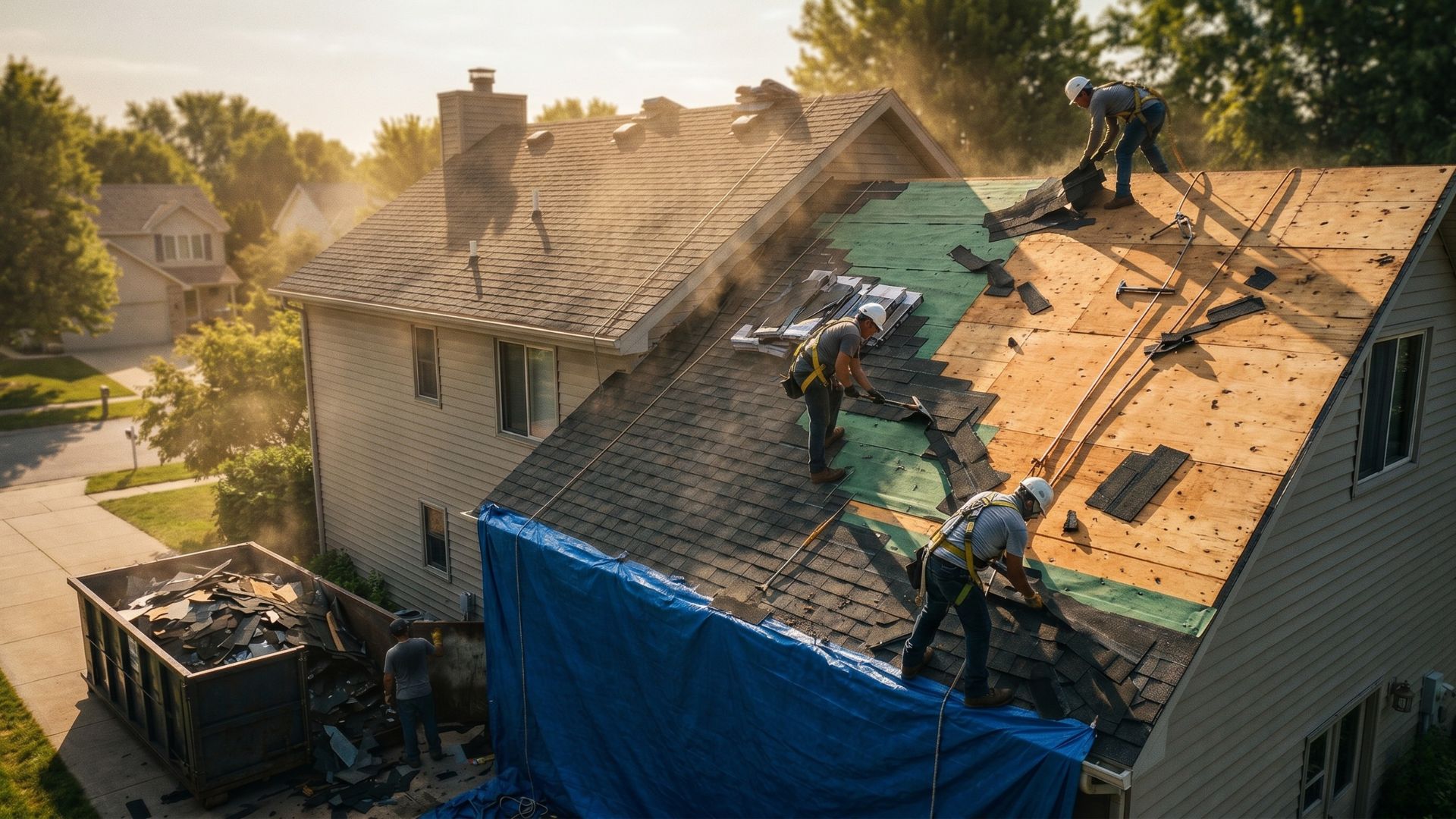
A typical residential reroof requires three to five skilled workers for efficient completion. The foreman should have multiple years of tenure with the company. If subcontractors are used, the contractor remains responsible for their work, insurance, and credentials. Get all subcontractor names in writing before work begins.
Warning Sign
An undisclosed reliance on subcontractors, a foreman who started working with the company recently, or a crew size dramatically out of proportion to the job too few suggests delays; too many without supervision creates chaos.
10
What Is the Expected Timeline, and What Happens If It Rains?
What to Ask
How many days will the work take from start to finish? What's the protocol if weather interrupts? How will my roof be protected overnight if work is paused?
What Good Looks Like
A specific timeline with built-in weather contingency. A well-organized contractor uses tarps, ice and water shield, or shingle-in stages so the roof is watertight at the end of each work day. The plan for rain interruption should be explained without prompting.
Warning Sign
"It depends" answers about weather contingency, exposed decking left overnight, or timelines that change repeatedly during the project without explanation.
11
What Safety Measures Does Your Crew Use?
What to Ask
What fall protection equipment does your crew use? What are your protocols for slope steepness?
What Good Looks Like
Visible safety equipment harnesses, roof brackets, safety lines, guardrails. Under OSHA standards in the United States, residential construction employers must provide fall protection for workers at heights of six feet or more. A contractor who treats safety as a serious operational priority is also more likely to treat your home as one.
Warning Sign
Crews working without visible fall protection, dismissive answers about safety ("we've never had an accident"), or contractors who claim safety equipment is "too expensive for small jobs." Safety shortcuts correlate with workmanship shortcuts.
12
How Will My Property Be Protected and Cleaned?
What to Ask
What will you do to protect my landscaping, gutters, AC unit, and outdoor furniture? How will you handle nail debris cleanup at the end of each day?
What Good Looks Like
Tarps over landscaping, plywood over delicate surfaces, dedicated magnetic sweepers used at end of day to recover fallen nails. The contractor walks through your property with you before work begins and notes any concerns in writing.
Warning Sign
Vague answers about cleanup, no use of magnetic sweepers, or post-job damage to landscaping that wasn't documented before work started.
13
Have You Considered Whether Replacement Is Actually Necessary?
What to Ask
Is full replacement actually necessary for my roof, or could repair or Structural Roof Rejuvenation extend the existing roof's service life?
What Good Looks Like
An honest contractor will assess whether your roof is structurally sound enough that replacement isn't yet warranted. For roofs 5 to 20 years old that are still structurally intact, Structural Roof Rejuvenation applied by a Certified GoNano Contractor can extend functional life by 10 to 15 years with a hard warranty, at a fraction of replacement cost.
Warning Sign
A contractor who recommends replacement without considering alternatives, dismisses preservation options without explanation, or claims that rejuvenation "doesn't work" without citing independent testing data.
14
What Is the Payment Schedule?
What to Ask
What is your payment schedule? Do you require a deposit, and if so, how much?
What Good Looks Like
A reasonable deposit (typically 10–30% of project value) plus milestone or completion payments. The full balance should never be due before work is substantially complete. Payment terms should be documented in the contract, not negotiated verbally.
Warning Sign
Demands for full payment upfront, cash-only payment requirements, deposits significantly above industry norms, or pressure to pay outside of standard methods (no records, no recourse).
15
Will You Pull the Required Permits?
What to Ask
Will you pull all required permits in your name? If permits are required, who is responsible for inspection scheduling?
What Good Looks Like
The contractor pulls all required permits in their own name making themselves accountable to the local building inspector. They schedule inspections proactively and provide you with copies of permits and signed-off inspection records.
Warning Sign
A contractor who asks the homeowner to pull permits (a major red flag this transfers liability to the homeowner), works without required permits, or is reluctant to discuss permit requirements.
These questions aren't meant to put contractors on the spot; they're meant to help you make a confident, informed decision. A good contractor should be happy to answer them, explain their recommendations, and provide documentation when needed.
What to Ask a Contractor After a Hail Event
The short answer
To use this checklist effectively, interview at least three contractors, ask all 15 questions of each, and document the answers in writing. Compare the responses side by side. If any contractor cannot answer at least 13 of the 15 questions clearly, eliminate them. The remaining contractors are your shortlist.
This checklist exists to filter, not to flatter. A confident, organized contractor welcomes these questions they're a chance to demonstrate that the operation is run professionally. A contractor who pushes back, gets defensive, or claims the questions are "unnecessary" is providing information about how they'll behave during the actual job.
1
Get it all in writing.
Verbal answers don't survive disputes. The questions worth asking are also worth documenting. Bring this checklist to the meeting, take notes directly on it, and keep the completed checklist with your eventual contract.
2
Don't anchor on price.
Three estimates that are all roughly the same suggest a fair market price. One estimate dramatically lower than the others is usually a warning sign the difference is often in what's been omitted from the scope of work.
3
The 90-second test.
If a contractor takes more than 90 seconds to answer any of these questions clearly, they may not have a good answer. Hesitation, in this context, is information.
Continue exploring
Structural Roof Rejuvenation works best when paired with a clear understanding of why roofs fail and what the alternatives cost. If you’re evaluating ice dam damage, you’ve likely come across everything from heat cables to full roof replacement. The guides below address the most common recommendations and explain what may actually be causing the problem.
What are the most important questions to ask a roofing contractor?
keyboard_arrow_down
The most important questions to ask a roofing contractor cover licensing and insurance, warranty type (hard vs. “up to”), warranty backing (manufacturer vs. individual contractor), manufacturer certifications for the specific products proposed, references from recent local jobs, and the payment schedule. Get every answer in writing before signing anything.
How do I know if a roofing contractor is legitimate?
keyboard_arrow_down
A legitimate roofing contractor provides documented proof of licensing, general liability insurance, and workers' compensation insurance on request. Their legal business name matches the documents. They have verifiable references from local jobs completed in the past 12 months. They are certified by the manufacturers of the products they propose to install.
What is the difference between a hard warranty and an “up to” warranty?
keyboard_arrow_down
A hard warranty guarantees the full warranty duration regardless of conditions. An “up to” warranty covers a maximum potential duration but allows the warranty issuer to reduce the actual term based on factors they control. The phrase “up to” is the single most important warning sign in any roofing warranty.
Should a roofing contractor be manufacturer certified?
keyboard_arrow_down
Yes. For roof replacement, manufacturer certification (such as GAF Master Elite or CertainTeed SELECT ShingleMaster) ensures the installer is trained on the specific products and that the warranty is valid. For Structural Roof Rejuvenation, the equivalent certification is Certified GoNano Contractor the only credential required for valid GoNano NuRoof warranty.
How many estimates should I get for a roofing job?
keyboard_arrow_down
Homeowners should obtain at least three written estimates for any significant roofing job. Use this 15-question checklist to interview each contractor under the same conditions. Compare estimates side by side, looking at scope, warranty terms, manufacturer certifications, and total project cost not just headline price. The cheapest estimate is rarely the best value.
What is a normal deposit for a roofing job?
keyboard_arrow_down
A reasonable deposit for a residential roofing job is typically 10 to 30 percent of total project value. Some contractors require less; some require no deposit at all. Full payment should never be due before work is substantially complete. Demands for full payment upfront are a significant warning sign of fraud or insolvency.
Who pulls the permits for a roofing job the homeowner or the contractor?
keyboard_arrow_down
The roofing contractor should pull all required permits in their own name. This makes the contractor accountable to the local building inspector for code compliance. If a contractor asks the homeowner to pull the permits, that is a major red flag it transfers liability for code violations to the homeowner.
What questions should I ask a roof rejuvenation contractor specifically?
keyboard_arrow_down
For a roof rejuvenation contractor specifically, ask whether they are certified by the product manufacturer, whether the warranty is hard or “up to,” whether the warranty is backed by the manufacturer or the contractor, what independent testing supports the product, and how many treatments will be required. GoNano NuRoof is a single-treatment, hard-warranty system.
What is a Certified GoNano Contractor?
keyboard_arrow_down
A Certified GoNano Contractor is a roofing professional trained and credentialed by GoNano to install NuRoof Fortify and NuRoof Revive products. There are over 420 Certified GoNano Contractors across Canada and the United States. The GoNano warranty is only valid when the treatment is installed by a Certified GoNano Contractor.
How do I verify a roofing contractor's references?
keyboard_arrow_down
Ask for three references from local jobs completed in the past 12 months. Call at least two of them. Ask about the timeline, the cleanup, whether the contractor stayed on schedule, what surprised them about the process, and whether they would hire the contractor again. Drive by one address if you can to see the work.