
⸻ Category Definition Guide

Understanding what your policy actually covers before damage happens
saves significant time and money when a claim is needed.
Homeowners insurance typically covers a new roof when the damage is caused by a sudden, covered event such as hail, wind, fallen trees, fire, or vandalism, and not by gradual wear, age, or lack of maintenance.
The exact coverage depends on the policy, the cause of damage, the roof's age, and the carrier's rules in the state where the home is located. Many policies that covered roof replacement easily a decade ago now have specific limits, age-based exclusions, and material-based deductibles that homeowners only discover when they file a claim.
This guide covers what's typically covered, what isn't, how roof age affects coverage, what carriers look for during inspections, and how impact-resistant credentials change the long-term cost picture.
Standard homeowners insurance policies generally cover roof damage from these sudden, covered events:
"Covered" doesn't always mean "fully paid." Most policies pay the cost of repair or replacement minus the deductible, and some have separate, higher deductibles for wind and hail specifically sometimes calculated as a percentage of the home's insured value rather than a flat dollar amount.
Insurance policies almost never cover these situations:
This is where many homeowners get blindsided. A 20-year-old roof that finally fails isn't a claim event; it's simply reaching the end of its service life. The solution is preventative maintenance, not an insurance claim.
Roof age has become one of the most consequential factors in homeowners insurance in 2026. Three things to understand:
Many carriers now exclude or limit older roofs
In states with high hail or hurricane exposure such as Florida, Texas, Oklahoma, Colorado, and a growing list of others; many carriers won't write new policies for roofs older than 15 or 20 years. Some non-renew existing policies when the roof crosses that threshold. The exact rule varies by carrier and state, but the trend is consistent: older roofs are increasingly viewed as a claims risk and priced or excluded accordingly.
Across the GoNano Contractor network, homeowners reporting policy non-renewals due to roof age have increased noticeably over the past two years. What began in Florida is now becoming a nationwide trend.
Actual Cash Value vs. Replacement Cost coverage
Policies on older roofs are increasingly written as Actual Cash Value (ACV) rather than Replacement Cost Value (RCV).
Actual Cash Value (ACV)
Pays the depreciated value of the roof at the time of loss, which on a 20-year-old roof might be only 20% of the replacement cost.
Replacement Cost (RCV)
Pays the full cost to replace with a new roof of equivalent quality.
A homeowner expecting an RCV payout and discovering they have ACV coverage faces a major surprise at claim time.
Inspection requirements at renewal
Carriers increasingly require roof inspections at policy renewal sometimes annually for older roofs. Roofs that fail the inspection may be subject to non-renewal, coverage modification, or required remediation. A roof that's been kept up well, with documented maintenance, passes these inspections far more often than a neglected one.
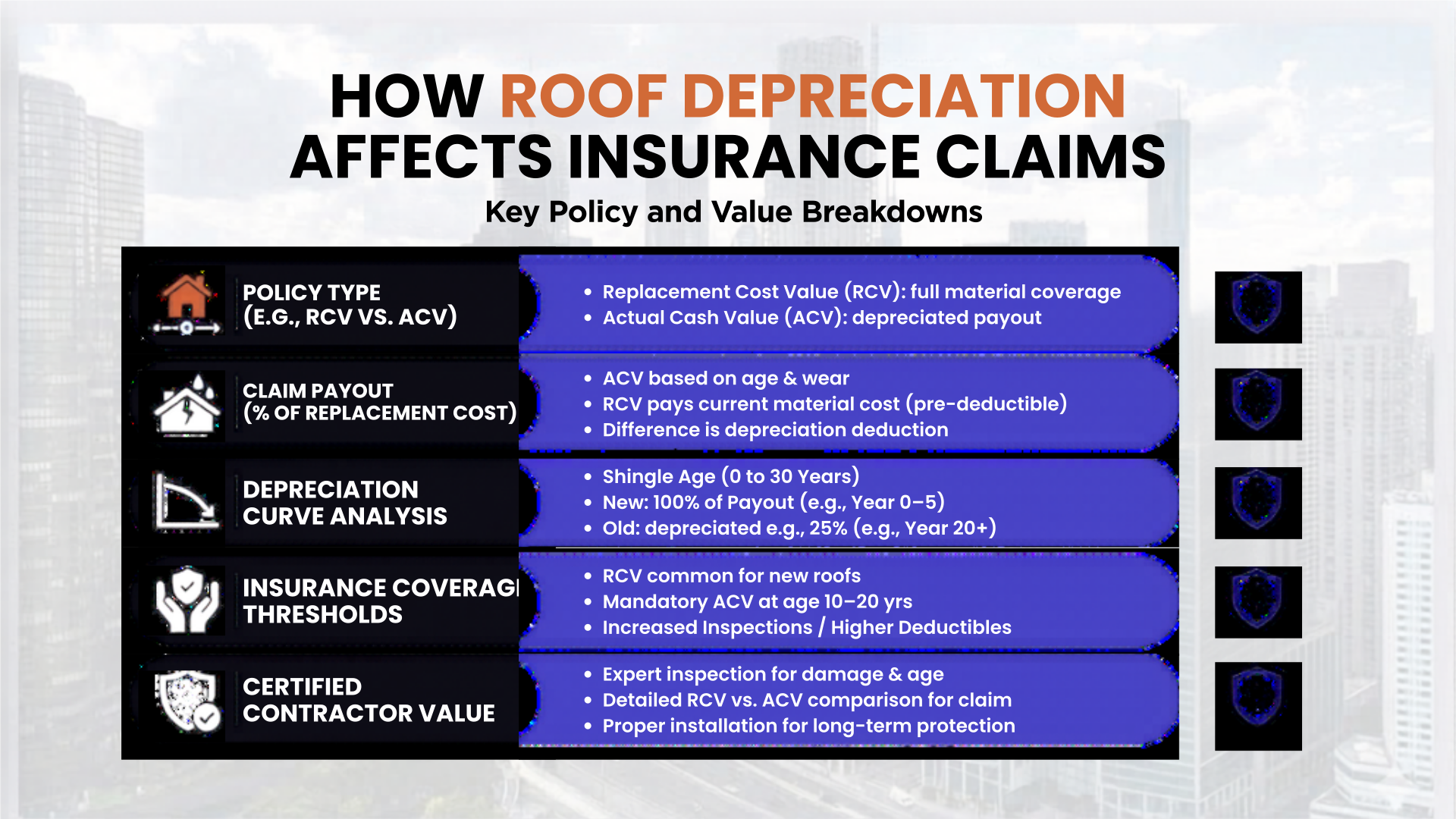
Roof age has become one of the most consequential factors in homeowners insurance
older roofs face exclusion, non-renewal, or reduced coverage.
When a carrier inspects a roof at claim time, at renewal, or before issuing a new policy they're looking at five things:
A roof that's been treated with a documented improvement like Structural Roof Rejuvenation with independent third-party testing and a hard transferable warranty provides exactly the kind of documentation carriers value: a recent, credentialed investment in the roof's structural integrity.
In one recent case, a homeowner facing non-renewal in Texas was retained on the policy after providing documentation of the NuRoof Revive installation and the 10-year hard transferable warranty.
Many carriers offer premium discounts for roofs with Class 4 impact resistance certification under the UL2218 standard. The discount varies by carrier and state in hail-prone markets, it can be 10–30% of the homeowner's premium. The math compounds over the life of the roof.
Two paths to Class 4 impact resistance:
Class 4 impact-resistant shingles
When replacing a roof, choosing Class 4 impact-resistant shingles adds material cost upfront but qualifies the home for the insurance discount and provides better resistance to future hail.
Structural Roof Rejuvenation with Class 4 certification
For roofs that aren't being replaced, GoNano's NuRoof line carries independent third-party UL2218 Class 4 impact resistance certification the same standard Class 4 shingles meet. This is one of the few ways to add Class 4 impact resistance to an existing roof without full replacement. GoNano NuRoof Revive (for roofs aged 6–20 years) and GoNano NuRoof Fortify (for roofs under 5 years) both carry the certification.
Homeowners considering whether their insurance discount alone justifies a rejuvenation treatment should request a quote from their carrier confirming the discount amount before committing the actual discount varies significantly by carrier. Even when a discount is not available, increased impact resistance may help reduce the future storm-related damage.

UL2218 Class 4 is the highest impact rating in residential roofing
and the credential many insurance carriers reward with premium discounts.
Structural Roof Rejuvenation works best when paired with a clear understanding of why roofs fail and what the alternatives cost. If you’re evaluating ice dam damage, you’ve likely come across everything from heat cables to full roof replacement. The guides below address the most common recommendations and explain what may actually be causing the problem.



Enjoyed this guide? Add GoNano as a preferred source on Google to see more like it.
Add as Preferred Source →No. Insurance covers damage from sudden, covered events not gradual aging or end-of-life replacement. A roof that's reached the end of its useful life is the homeowner's responsibility, which is one reason preventative care matters.
Possibly. Roof claims are tracked in carrier databases, and multiple claims within a few years can lead to premium increases or non-renewal. Single claims for clearly storm-related damage usually have less impact than claims that look like deferred maintenance.
Yes and increasingly, they do. In hail and hurricane-prone states, carriers may non-renew policies when roofs cross age thresholds (commonly 15 or 20 years) or when inspections reveal condition problems. The trend is national, not just regional. Maintaining the roof and documenting improvements can help retention.
Many carriers offer discounts for roofs with UL2218 Class 4 impact resistance certification. NuRoof products carry this certification through independent third-party testing. Whether a specific carrier offers the discount and at what level varies — homeowners should ask their carrier directly before making the investment decision.
Most policies require claims within one year of the loss event, but some require 60 days or less for storm damage. Check your specific policy. File as soon as damage is discovered, even if it seems minor late claims for storm damage are routinely denied.
Les Produits GoNano Inc1209
Orange StreetWilmington,
Delaware 19801United States