Charles Dumont
Navigating IRS Rules for Smarter Commercial Roofing.
Roofs
In the high-stakes sector of commercial real estate, asset preservation dictates profitability. Yet, commercial roofing decisions are frequently driven by temporary accounting maneuvers rather than material science. The prevailing industry norm—applying temporary roof oils to secure immediate tax deductions—is a strategic failure. True financial stewardship requires a permanent technological upgrade, not a superficial fix.
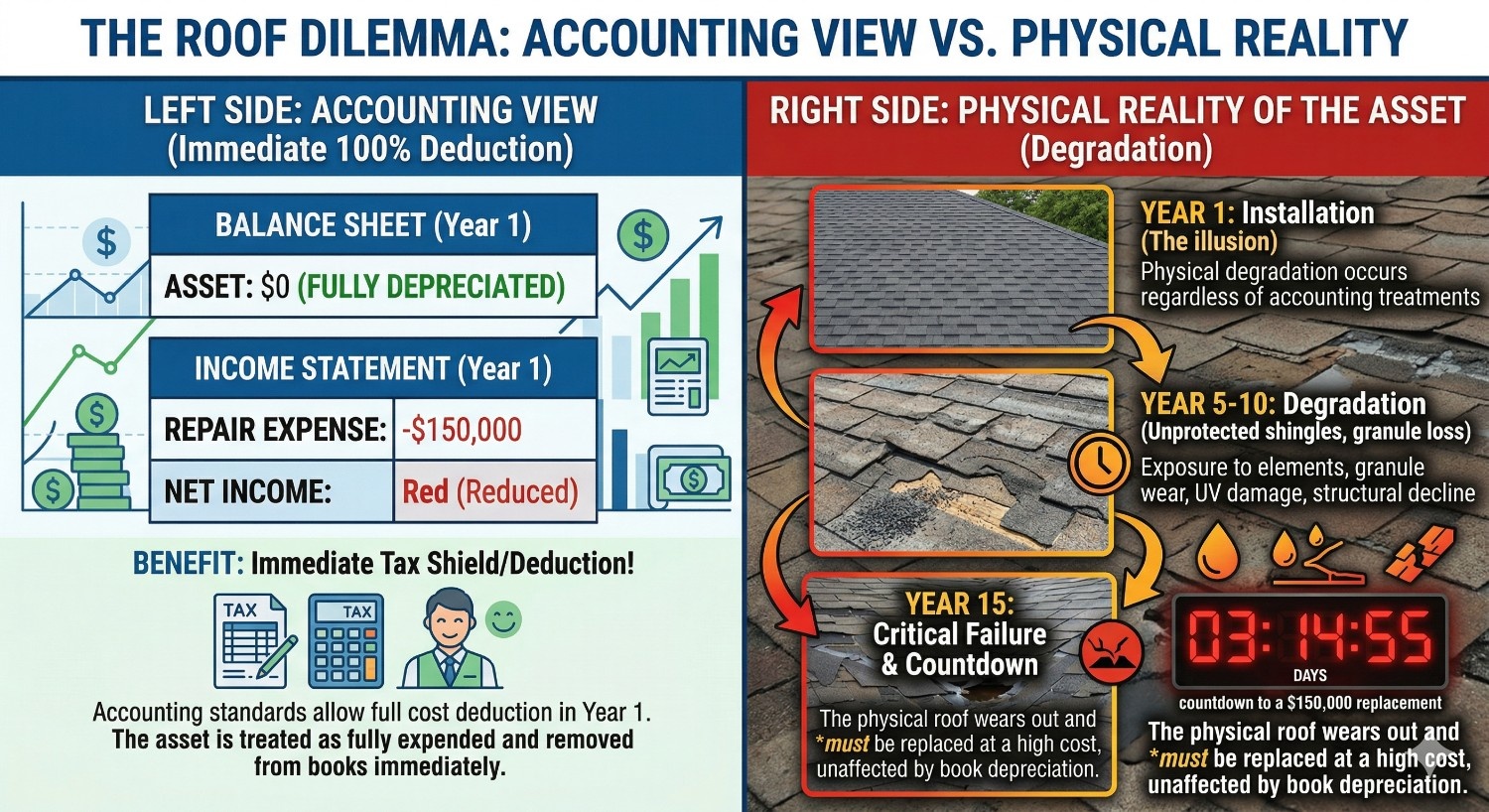
The primary marketing weapon for agricultural bio-oils (soy and corn derivatives)is the promise of an immediate 100% tax deduction under IRC Section 162. By classifying a temporary oil application as "routine maintenance, "property managers attempt to bypass the punitive 39-year depreciation schedules triggered by a total roof replacement. The mathematical flaw is absolute: a 100% tax deduction yields zero financialadvantage when the underlying treatment accelerates physical degradation.
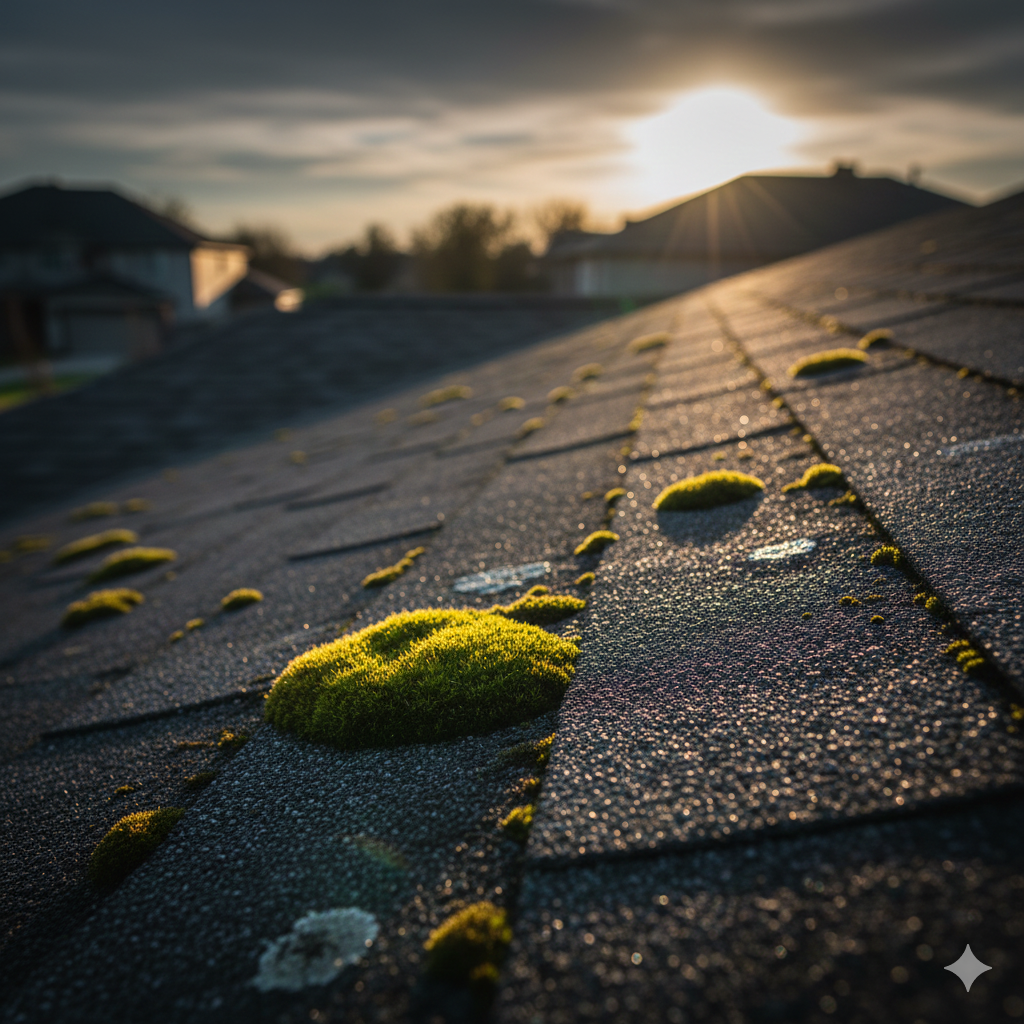
Agricultural oils are temporary surface treatments. They suffocate the asphalt. They trapmoisture. They operate as the functional equivalent of a sealer—a catastrophic approach that rots the roofing matrix from the inside out. These "flexibility-only" products lack cross-linking polymers and leave multi-million dollar assets critically exposed:
UV Oxidation & Binder Failure: Without a permanent mechanism to secure granular adhesion, UV rays rapidly degrade the exposed bitumen.
Thermal Shock: Unmitigated shear stress destroys perimeter flashing and fasteners. Impact Trauma: Zero structural defense against hail, biological weathering, or mechanical foot traffic.
The IRS Tangible Property Regulations (T.D. 9636) utilize the BAR test to determine if an expense must be capitalized. While traditional roof replacements trigger Section 263(a) capitalization, advanced molecular modification occupies a superior financial and scientific vector.
Deploying NuRoof Fortify or NuRoof Revive restructures the asphalt at the cellular level. It satisfies the structural fortification requirements of a capital improvement while frequently qualifying for the Routine Maintenance or De Minimis Safe Harbors, depending on the scale of the enterprise. This enables rapid write-offs without sacrificing physical performance.
This is not a temporary surface application. It is deep-penetrating molecular rejuvenation anchored in empirical proof:
Oxidation Reversal: Independent CNETE studies verify a massive reduction in carbonyl groups, actively reversing the aging process of the asphalt.
Structural Fortification: Modifies the substrate to elevate standard commercial roofing systems to UL 2218 Class 4 Impact Resistance.
Vapor Permeability: Maintains a 100% breathable, hydrophobic barrier. The roof exhales moisture; it does not trap it.
Environmental Integrity: Formulated with low VOCs and100% biodegradable, non-toxic compounds.
Option A: The Bio-Oil Route(Systematic Failure)
● Action: Deduct a surface-level bio-oil application in Year 1.
● Result: The substrate continues to physically degrade. Granulesdetach. Moisture is trapped beneath the surface.
● Impact: Catastrophic failure in Year 4 requires a massive,non-deductible capital expenditure for total roof replacement, capitalizingover 39 years and devastating the asset's Cap Rate.
Option B: The GoNano Route (Asset Fortification)
● Action: Apply permanent nanosilicamolecular modification via NuRoof Revive.
● Result: Cross-linking polymers alterthe density of the asphalt. Granular adhesion is locked.
● Impact: Structural replacement isdelayed by a decade or more. Net Present Value (NPV) is radically optimized,and cash flow is preserved.
Commercial propertymanagement demands absolute risk mitigation. The agricultural oil industryissues narrow "flexibility" warranties—meaningless legal shields thatcover the suppleness of a failing shingle as it physically disintegrates.
GoNano providesuncompromising structural protection. Our performance metrics reflect thepermanent reality of molecular modification. We do not warrant a surfaceapplication; we warrant the fortification of the asphalt matrix against theprimary drivers of commercial roofing failure.
Cease relying on temporaryaccounting maneuvers. Protect the physical asset.
Disclaimer: This article isprovided for informational purposes only and does not constitute tax, legal, oraccounting advice. Consult your tax advisor regarding the application of IRCSection 162, Section 263(a), and Safe Harbor regulations to your specific realestate portfolio.


.webp)


Demandez un devis pour l'application de notre technologie GoNano aujourd'hui
Obtenez Un Devis
Navigate complex IRS rules and tax benefits to make smarter, cost-effective decisions for your commercial roofing projects.
In the high-stakes sector of commercial real estate, asset preservation dictates profitability. Yet, commercial roofing decisions are frequently driven by temporary accounting maneuvers rather than material science. The prevailing industry norm—applying temporary roof oils to secure immediate tax deductions—is a strategic failure. True financial stewardship requires a permanent technological upgrade, not a superficial fix.
The primary marketing weapon for agricultural bio-oils (soy and corn derivatives)is the promise of an immediate 100% tax deduction under IRC Section 162. By classifying a temporary oil application as "routine maintenance, "property managers attempt to bypass the punitive 39-year depreciation schedules triggered by a total roof replacement. The mathematical flaw is absolute: a 100% tax deduction yields zero financialadvantage when the underlying treatment accelerates physical degradation.
Agricultural oils are temporary surface treatments. They suffocate the asphalt. They trapmoisture. They operate as the functional equivalent of a sealer—a catastrophic approach that rots the roofing matrix from the inside out. These "flexibility-only" products lack cross-linking polymers and leave multi-million dollar assets critically exposed:
UV Oxidation & Binder Failure: Without a permanent mechanism to secure granular adhesion, UV rays rapidly degrade the exposed bitumen.
Thermal Shock: Unmitigated shear stress destroys perimeter flashing and fasteners. Impact Trauma: Zero structural defense against hail, biological weathering, or mechanical foot traffic.
The IRS Tangible Property Regulations (T.D. 9636) utilize the BAR test to determine if an expense must be capitalized. While traditional roof replacements trigger Section 263(a) capitalization, advanced molecular modification occupies a superior financial and scientific vector.
Deploying NuRoof Fortify or NuRoof Revive restructures the asphalt at the cellular level. It satisfies the structural fortification requirements of a capital improvement while frequently qualifying for the Routine Maintenance or De Minimis Safe Harbors, depending on the scale of the enterprise. This enables rapid write-offs without sacrificing physical performance.
This is not a temporary surface application. It is deep-penetrating molecular rejuvenation anchored in empirical proof:
Oxidation Reversal: Independent CNETE studies verify a massive reduction in carbonyl groups, actively reversing the aging process of the asphalt.
Structural Fortification: Modifies the substrate to elevate standard commercial roofing systems to UL 2218 Class 4 Impact Resistance.
Vapor Permeability: Maintains a 100% breathable, hydrophobic barrier. The roof exhales moisture; it does not trap it.
Environmental Integrity: Formulated with low VOCs and100% biodegradable, non-toxic compounds.
Option A: The Bio-Oil Route(Systematic Failure)
● Action: Deduct a surface-level bio-oil application in Year 1.
● Result: The substrate continues to physically degrade. Granulesdetach. Moisture is trapped beneath the surface.
● Impact: Catastrophic failure in Year 4 requires a massive,non-deductible capital expenditure for total roof replacement, capitalizingover 39 years and devastating the asset's Cap Rate.
Option B: The GoNano Route (Asset Fortification)
● Action: Apply permanent nanosilicamolecular modification via NuRoof Revive.
● Result: Cross-linking polymers alterthe density of the asphalt. Granular adhesion is locked.
● Impact: Structural replacement isdelayed by a decade or more. Net Present Value (NPV) is radically optimized,and cash flow is preserved.
Commercial propertymanagement demands absolute risk mitigation. The agricultural oil industryissues narrow "flexibility" warranties—meaningless legal shields thatcover the suppleness of a failing shingle as it physically disintegrates.
GoNano providesuncompromising structural protection. Our performance metrics reflect thepermanent reality of molecular modification. We do not warrant a surfaceapplication; we warrant the fortification of the asphalt matrix against theprimary drivers of commercial roofing failure.
Cease relying on temporaryaccounting maneuvers. Protect the physical asset.
Disclaimer: This article isprovided for informational purposes only and does not constitute tax, legal, oraccounting advice. Consult your tax advisor regarding the application of IRCSection 162, Section 263(a), and Safe Harbor regulations to your specific realestate portfolio.