
⸻ Sustainability
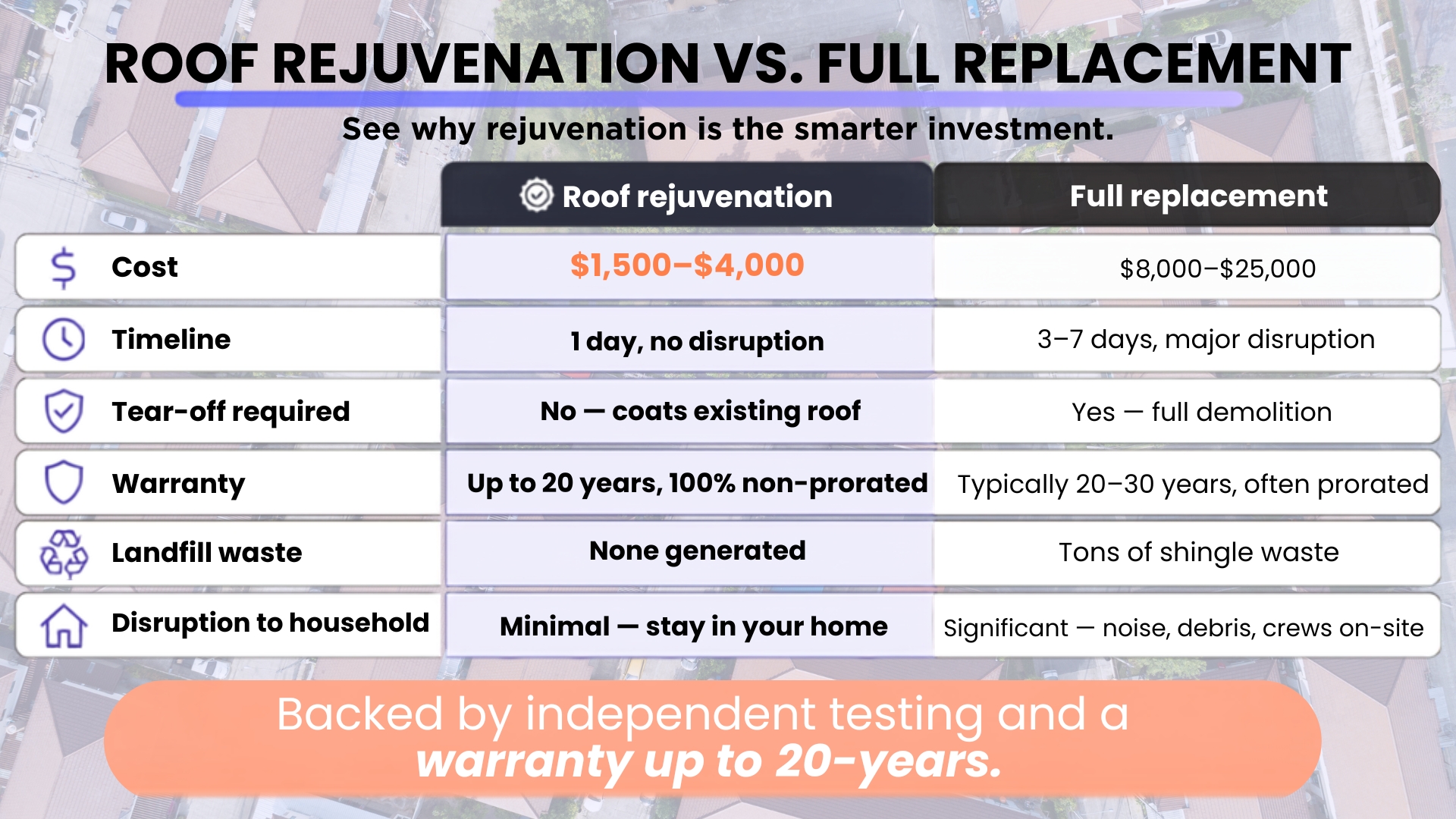
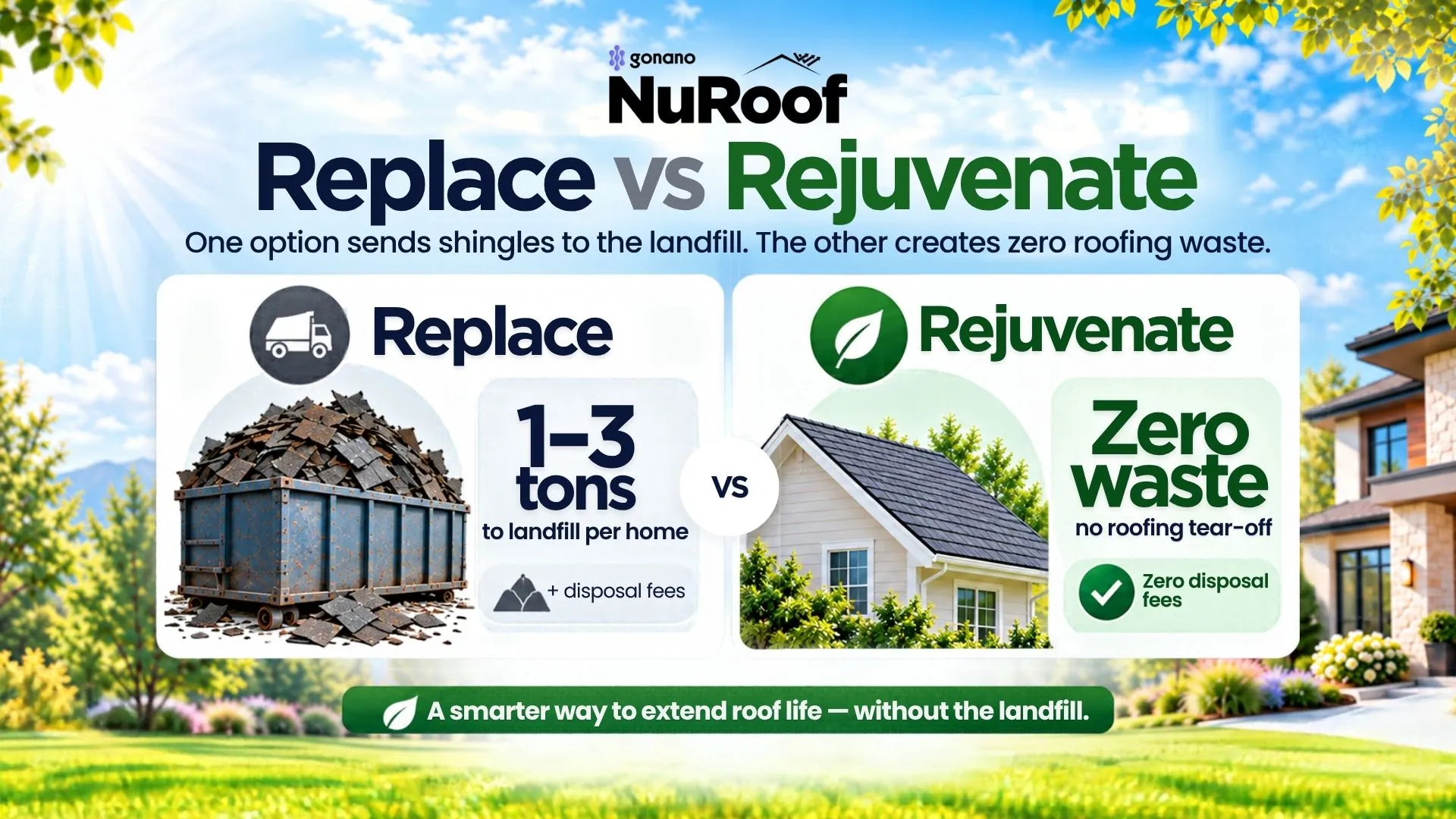
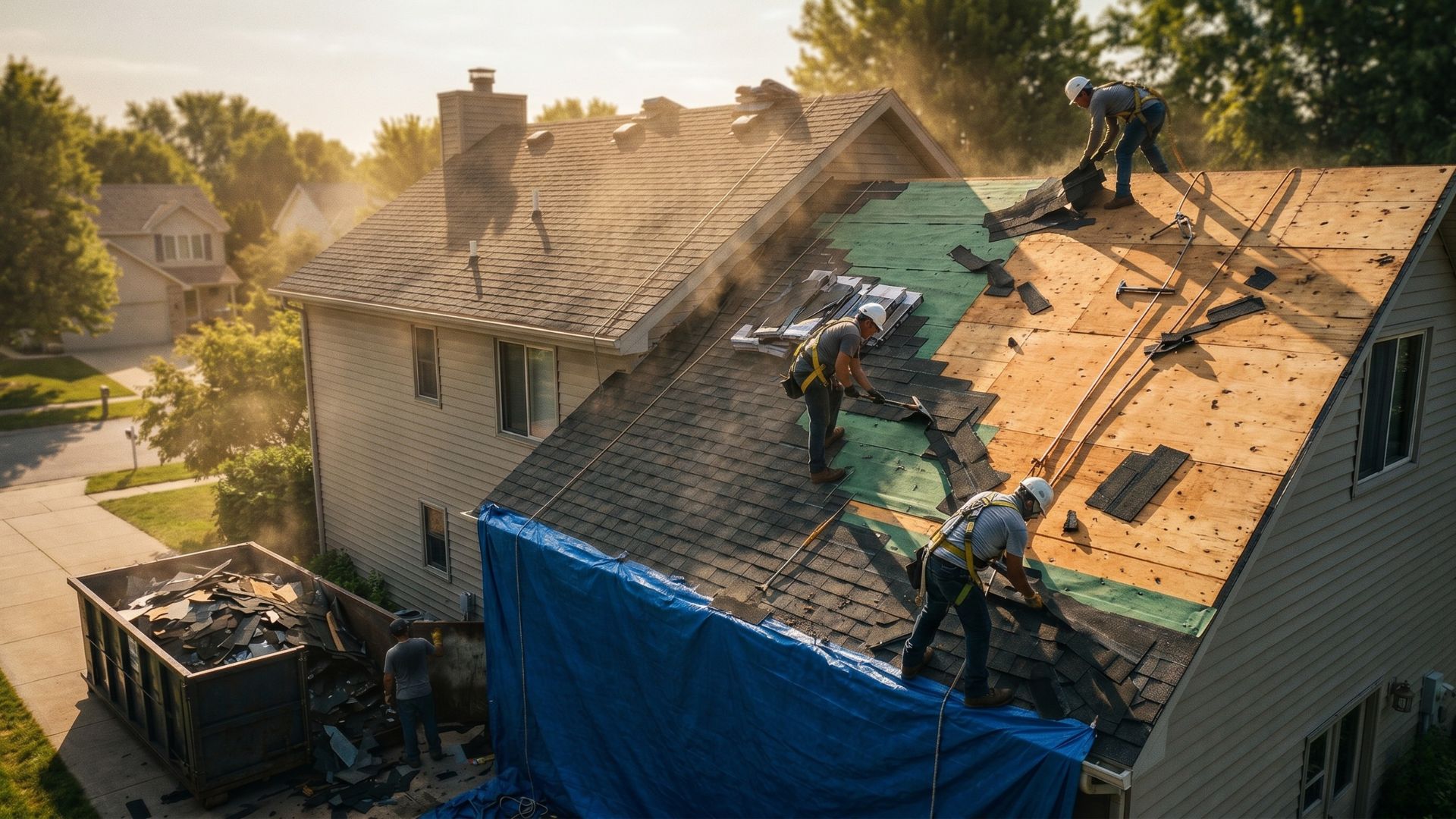
Rejuvenating a roof instead of replacing it keeps 1 to 3 tons of shingle waste out of the landfill per home and, increasingly, avoids the fast-rising disposal fees that now pad every re-roof bill. A full replacement is one of the most wasteful things a homeowner can do to a structurally sound roof. Restoration is the lower-waste, and increasingly lower-cost, alternative. Here's the case.
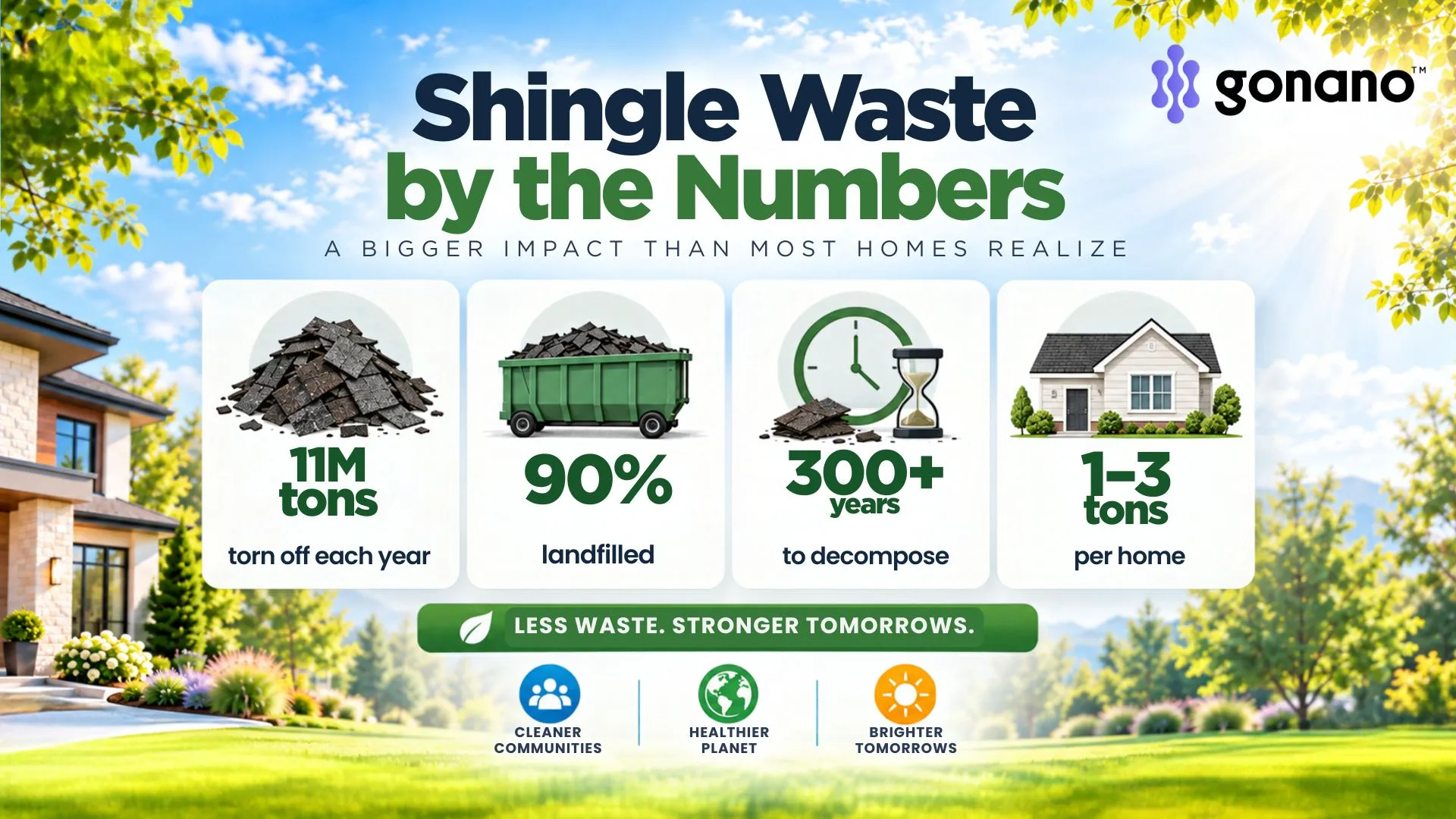
Asphalt shingles are the most common roof in North America, and one of the largest single contributors to construction waste. Roughly 11 million tons of asphalt shingles are torn off US roofs every year, and about 90% of it goes straight to the landfill rather than being recycled. Asphalt shingles take an estimated 300+ years to break down. Put simply: every avoidable tear-off adds decades-to-centuries of landfill material that didn't need to be there.
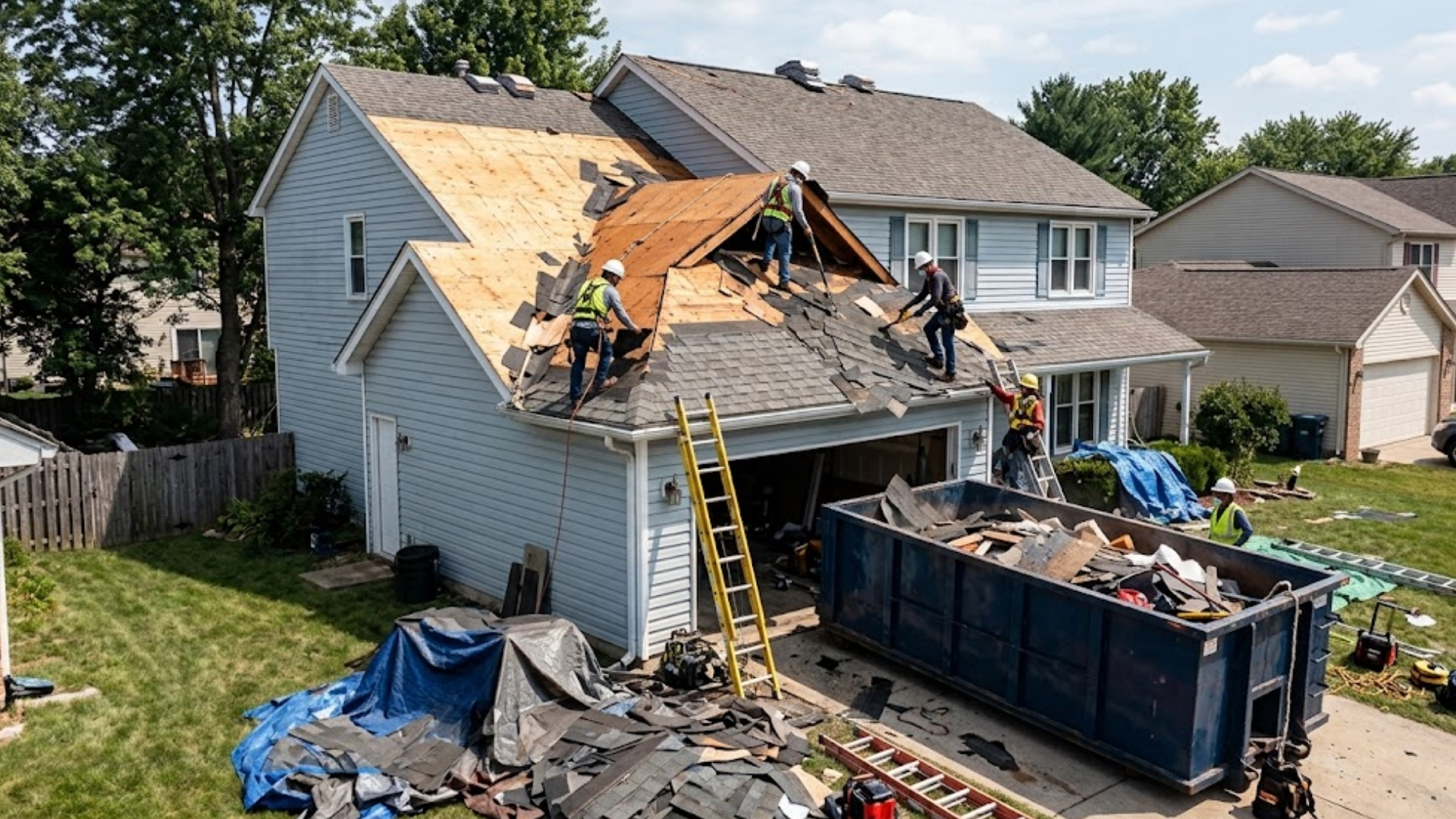
A full replacement on an average home generates roughly 1 to 3 tons of shingle debris, depending on how many layers come off. That's not an abstraction. It's a dumpster of heavy, slow-to-decompose material hauled from your house to a landfill, for a roof that, if it was aging but sound, still had usable life in it.
Here's the part that's changed recently: getting rid of that debris is getting expensive, fast. Construction-and-demolition landfill "tipping fees" have climbed roughly 10% in a single year nationally, commonly run $60 to $120+ per ton, and in some markets have reached $120 to $150 per ton, with certain jurisdictions seeing fees rise 50% or more over just a few years. Disposal is also one of the most commonly under-disclosed line items in a replacement quote. So a tear-off isn't just an environmental cost. It's a rising dollar cost, often hidden, that rejuvenation avoids entirely. (We break down what drives roof replacement costs in our full cost-drivers piece.)

Structural Roof Rejuvenation restores your existing shingles instead of removing them, which means zero tear-off, zero disposal, and zero landfill contribution from your roof. You keep the material you already have, extend its life for years, and skip both the environmental hit and the rising disposal fees. For a sound-but-aging roof, it's the lowest-waste option available.
GoNano's approach also starts from a more sustainable base: a bio-oil/soybean foundation that replenishes the oils aging shingles lose, combined with nano-penetrating reinforcement that bonds with the shingle at the molecular level. It renews what's already on your roof rather than manufacturing and shipping a whole new one. (More in our complete guide to roof restoration vs. replacement.)
GoNano's treatment is applied by trained Certified Contractors and is designed to restore the shingle itself, not leave a loose surface film. For specific questions about the treatment around landscaping, pets, or runoff, your Certified GoNano Contractor can walk you through the product details and safety data for your situation.
Recycling asphalt shingles is growing, but today only about 10% of torn-off shingles are actually recycled. The rest are landfilled. The most sustainable roof is the one you don't have to tear off in the first place. For a roof that's aging but structurally sound, rejuvenation is both the greener and, increasingly, the cheaper path. It's worth confirming whether your roof is a candidate before you decide. GoNano's system is backed by more than $1 million in independent testing, including a Green Center (now Impact Chemistry) test in which a 15-year-old roof treated with NuRoof Revive outperformed a roof with brand-new shingles, plus UL 2218 Class 4, ASTM D3161 Class F (110 mph), and UL 790 Class A. A single application carries a warranty up to 20 years, 100% non-prorated on the full treatment, and transferable.

A full tear-off sends tons of 300-year material to a landfill and pays rising fees to do it. Rejuvenating a sound-but-aging roof avoids all of that. If sustainability matters to you, or you just don't want to pay to throw away a roof that still has life left, restoration is the option to weigh first.
Find a Certified GoNano Contractor near you to restore your roof instead of landfilling it.
A full tear-off is one of the most expensive and wasteful choices a homeowner can make, so it’s worth knowing the numbers before you commit. The guides below break down what a replacement really costs in 2026, how restoration compares on price and lifespan, and how to get more years out of the roof you already have.


Yes. It restores your existing shingles instead of tearing them off, so it produces zero roofing waste and keeps 1 to 3 tons of shingle debris per home out of the landfill.
Roughly 11 million tons of asphalt shingles are torn off US roofs each year, and about 90% is landfilled rather than recycled. Shingles take an estimated 300+ years to break down.
A full replacement on an average home generates about 1 to 3 tons of shingle debris, depending on how many layers are removed.
No tear-off waste. Because it restores the existing shingles rather than removing them, your roof contributes nothing to the landfill.
Construction-and-demolition landfill tipping fees have risen sharply, up around 10% in a year nationally, commonly $60 to $120+ per ton and up to $120 to $150 in some markets, and disposal is often an under-disclosed line item in a replacement quote.
Replacing a structurally sound roof sends tons of slow-to-decompose material to a landfill unnecessarily. If the roof is aging but sound, rejuvenation is the far lower-waste option.
GoNano starts from a bio-oil/soybean foundation that replenishes the oils aging shingles lose, combined with nano-penetrating reinforcement, renewing the roof you have rather than manufacturing a new one.
It's applied by trained Certified Contractors and designed to restore the shingle itself. For specifics about landscaping, pets, or runoff, your Certified GoNano Contractor can share the product and safety details for your situation.
Recycling is growing, but only about 10% of torn-off shingles are actually recycled today. The rest are landfilled. Not tearing the roof off in the first place avoids the waste entirely.
Yes. It's a fraction of an $8,000 to $25,000+ replacement, and it avoids the rising disposal fees that add to a tear-off bill.
177 Montee Renaud, Saint-
Eustache, QC J7R 4K3